
SHILLEHTEK Universal Power Supply Module
4.6Editor score
Universal MB102 breadboard compatibility
Select 3.3V or 5V outputs
Affordable single piece price
This guide compares the top 12V breadboard power supply options for makers, featuring detailed specs, ratings, and expert insights to help you choose the right
Finding the right power source is crucial for any electronics project. A stable 12V breadboard power supply ensures your components receive consistent voltage without risking damage or erratic behavior during testing phases.
We evaluated ten top-rated modules based on input flexibility, output stability, and ease of use. Our comparison covers everything from basic dual-channel boards to advanced adjustable units with digital displays.
Each pick highlights specific strengths like current capacity, protection features, and compatibility with popular microcontrollers. Please note that product prices and availability may change frequently on retail platforms.
4.6Editor score

4.5Editor score

4.8Editor score
The following table provides a side-by-side overview of all ten selected products. Compare their input ranges, output capabilities, and key features to find the best match for your specific prototyping needs.


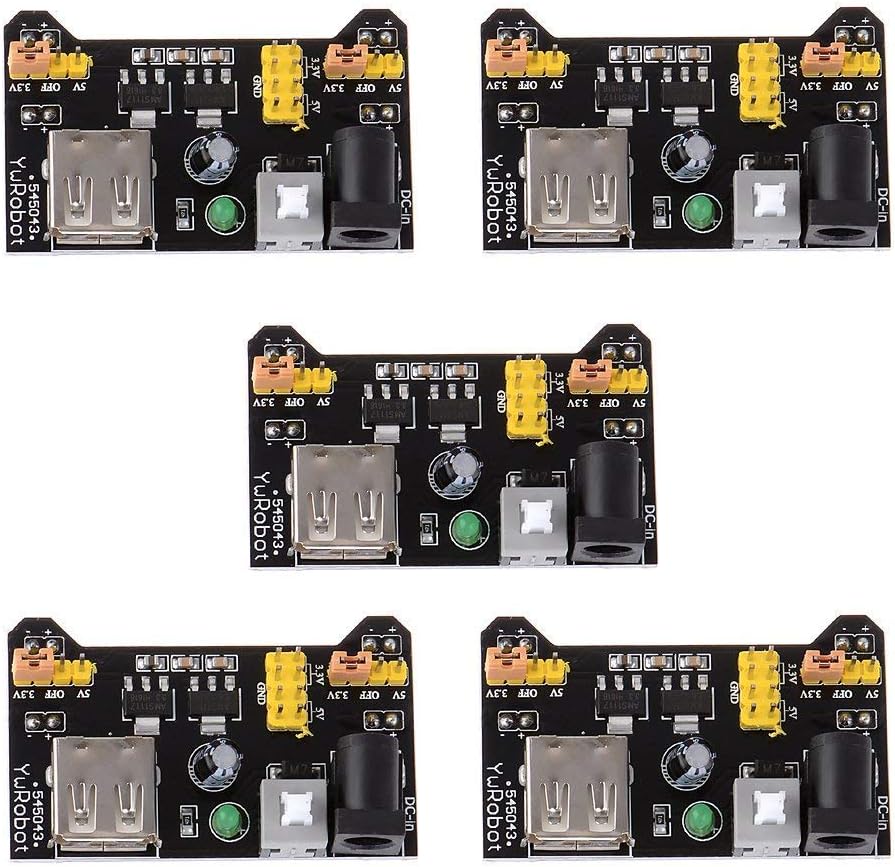


This module stands out as the top choice for serious hobbyists needing reliable power. With a 4.5 rating, it balances performance and cost effectively for daily use.
We may earn a commission when you buy through this link, at no additional cost to you.
The ability to draw 2A at 5V makes it suitable for powering demanding boards like Raspberry Pi or ESP32 directly. Independent switches allow you to run different voltage rails simultaneously.
While the switch mechanism is standard, users must ensure they toggle the correct voltage selector to avoid damaging low voltage components. The size is manageable but occupies significant breadboard space.
Buy this if you need high current capacity and the convenience of having a spare unit ready. It is ideal for workstations where multiple projects run at once.
The 2A output at 5V ensures you can power larger peripherals without voltage drops.
Supports both modern USB-C and classic DC jacks for versatile power sourcing.
We may earn a commission when you buy through this link, at no additional cost to you.
This kit offers five modules at a low price point, making it perfect for bulk purchases. It maintains a decent 4.2 rating among users who value quantity over advanced features.
We may earn a commission when you buy through this link, at no additional cost to you.
The inclusion of 9V connectors allows for easy battery-powered prototyping without needing extra adapters. It works reliably for simple LED and sensor circuits.
However, the current limit of 700mA restricts use with high drain devices like motors. Users should be aware of the lower power ceiling compared to modern high current modules.
Purchase this if you are outfitting a classroom or need multiple basic units for simple testing. It is a cost effective solution for education.
Five modules ensure every student has a power source without breaking the budget.
Included connectors make switching to 9V batteries simple for portable projects.
We may earn a commission when you buy through this link, at no additional cost to you.
This kit is designed for beginners who want everything in one box. It includes a power module, breadboard, jumper wires, and a 12V power adapter for immediate use.
We may earn a commission when you buy through this link, at no additional cost to you.
The setup allows you to start prototyping immediately without hunting for individual components. It supports standard 3.3V and 5V outputs for most microcontrollers.
The downside is that the included adaptor limits total system power to 1A. This might restrict the number of components you can run simultaneously on the breadboard.
Ideal for absolute beginners starting their first Arduino project. It removes the friction of sourcing compatible power adapters and wires separately.
Every necessary component for a basic setup is included in the package.
Plug and play functionality reduces setup time for new hobbyists.
We may earn a commission when you buy through this link, at no additional cost to you.
HiLetgo modules are staples in the maker community due to their consistent quality. This five pack provides a reliable foundation for various prototyping tasks.
We may earn a commission when you buy through this link, at no additional cost to you.
The compact size ensures it fits easily into crowded breadboards without blocking too many rows. The voltage selection is straightforward with a clear jumper.
The input range of up to 9V might be limiting if you plan to use higher voltage wall adapters. Also, the current limit restricts high power applications.
Choose this for general purpose prototyping where high current is not required. It is a standard choice for sensor arrays and small logic circuits.
HiLetgo has a reputation for durable and consistent electronics components.
Small design minimizes space usage on your workspace.
We may earn a commission when you buy through this link, at no additional cost to you.
Offering a highly rated performance at a low cost, this module is the smart choice for budget conscious builders. It achieves a 4.6 rating despite its simplicity.
We may earn a commission when you buy through this link, at no additional cost to you.
Its universal compatibility with MB102 breadboards ensures a secure fit without needing additional adapters. The input flexibility supports both USB and DC sources.
While it lacks the high current features of premium units, it handles standard microcontroller power needs effectively. The lack of multiple units in the pack is a minor drawback.
Perfect for single project builds or those testing the waters with electronics. It provides essential voltage regulation without unnecessary complexity.
High quality regulation at a price point that minimizes risk.
Designed to fit standard breadboards with precision.
We may earn a commission when you buy through this link, at no additional cost to you.
This five pack offers excellent value for group projects or workshops needing multiple power sources. It matches the functionality of the WWZMDiB kit with similar specs.
We may earn a commission when you buy through this link, at no additional cost to you.
The inclusion of 9V connectors allows for battery power integration without extra purchase. It maintains a 4.5 rating for reliability in simple circuits.
Like other budget units, the current is limited to 700mA. This makes it unsuitable for motor control or heavy LED arrays on a single board.
Buy for classroom distribution or multiple workspace setups. It ensures everyone has a dedicated power source.
Five units allow for simultaneous multi user projects.
Included connectors simplify portable project setup.
We may earn a commission when you buy through this link, at no additional cost to you.
This kit appeals to makers who want to build their own supply. It uses an LM2596 module to provide adjustable outputs and a digital display for visual monitoring.
We may earn a commission when you buy through this link, at no additional cost to you.
The soldering aspect makes it a great learning tool for understanding circuit assembly. The adjustable output is useful for testing components at various voltage levels.
However, it requires soldering skills to assemble which may deter beginners looking for instant gratification. The assembly time adds to the total effort before use.
Select this if you want to learn hardware assembly while powering projects. It bridges the gap between buying and building electronics.
Soldering provides hands-on experience with electronics fabrication.
Digital display confirms exact voltage levels instantly.
We may earn a commission when you buy through this link, at no additional cost to you.
SunFounder has designed this module to meet modern power needs with higher amperage. It supports 1.5A at 5V which is crucial for Pi Pico and ESP32 projects.
We may earn a commission when you buy through this link, at no additional cost to you.
The independent channels allow you to isolate power rails preventing noise issues. The extra USB output adds convenience for powering small USB devices directly.
The compact design saves space on the breadboard compared to older bulky models. However, the fixed voltage selection might be less flexible for some users.
Ideal for modern microcontroller projects requiring higher current stability. It is a robust choice for serious prototyping.
1.5A output ensures stable voltage for power hungry boards.
Independent channels prevent cross interference.
We may earn a commission when you buy through this link, at no additional cost to you.
This module offers the highest versatility with its wide input range and adjustable output options. With a 4.8 rating, it is highly praised for its engineering.
We may earn a commission when you buy through this link, at no additional cost to you.
It allows you to run projects at 3.3V 5V 12V or any value in between. The wide input range means it can accept various power adapters without conversion.
While it does not plug directly into a breadboard like others, this flexibility makes it a lab staple. You will need to wire it to your board manually.
Best for advanced users who need variable voltage for diverse experiments. It is the most adaptable option in this list.
Adjustable output allows testing components at specific voltages.
Accepts power sources from 5V up to 40V.
We may earn a commission when you buy through this link, at no additional cost to you.
This adapter is a full lab bench power supply suitable for various electronics needs. It provides a massive 72W of power and supports up to 24V output.
We may earn a commission when you buy through this link, at no additional cost to you.
The LCD screen shows exact output voltage in real time which is rare at this price point. It includes many DC tips for different devices and adapters.
It is not designed to plug into a breadboard directly but provides robust power for any project. Its size makes it less portable than smaller modules.
Use this as a central power source for large setups or multiple devices. It is best for permanent installations rather than portable prototyping.
72W total power handles demanding loads easily.
Multiple connectors ensure compatibility with various devices.
We may earn a commission when you buy through this link, at no additional cost to you.
Selecting the right power supply involves checking input and output specs. Below are the key factors to consider before making a purchase.
Check the supported input voltage to ensure it matches your power source. Most modules accept DC 6.5V to 12V but some support wider ranges like 5V to 40V. Using the correct input prevents damage to the regulator.
Ensure your wall adapter or battery matches the module specifications before plugging it in.
Determine how much current your project requires. Basic sensors need only 100mA while Pi boards need over 1A. Modules often limit current to 700mA unless specified as high power.
Choose a module that exceeds your project current needs by 20 percent.
Look for modules offering selectable 3.3V and 5V outputs. Some advanced units allow adjustable voltage via potentiometers for flexible testing needs. Fixed voltage options are simpler but less versatile.
Select selectable outputs if you work with mixed voltage components.
Ensure the module fits your breadboard size such as MB102. Most modules have specific pin spacing to fit into the power rails directly. Mismatched pins may require adapter wires.
Verify the pin layout matches your board before buying to ensure a snug fit.
Safety features like short circuit protection prevent damage during wiring errors. High current modules should have thermal protection to avoid overheating. These features protect your expensive microcontrollers.
Always choose a module with built in protection for safe experimentation.
Measure the size of the module to see how much space it takes. Large modules might block important rows on smaller breadboards. Compact units save space for circuit components.
Prioritize smaller units if you have limited workspace on your board.
Check if the input is USB or DC jack. Modern modules support USB-C for easy phone charger compatibility. Older ones might require a specific barrel plug type.
Choose a module that supports power sources you already own.
Some listings sell single units while others offer packs of five. Bulk packs are cost effective for groups or workshops needing multiple supplies. Single units are fine for personal use.
Buy a pack if you need to share supplies across multiple projects.
Plug the module into the positive and negative rails of your breadboard. Connect your input power adapter or USB cable securely. Ensure the voltage switch is set to 3.3V or 5V as needed.
Monitor the LED indicator lights to confirm power is active before connecting components. Double check wiring to avoid short circuits which can damage the module instantly. Use jumpers to distribute power to your circuit.
Unplug power before making any wiring changes to prevent electrical spikes. Clean dust from the module regularly to maintain airflow and prevent overheating. Store in a dry place to avoid corrosion on the pins.
The 3.3V output is for modern low voltage logic boards like ESP32 or Raspberry Pi Pico. The 5V output is for older boards like Arduino Uno. Using the wrong voltage can permanently damage sensitive electronics.
No using a voltage higher than the maximum rating can burn out the internal regulator. Always check the input range such as 6.5V to 12V before connecting an adapter. Exceeding this limit voids warranties and risks fire.
It gets hot because the voltage regulator dissipates excess energy as heat during conversion. This is normal if current draw is moderate but excessive heat indicates overloading. Let it cool before touching to avoid burns.
Most modules work with standard MB102 boards but pin spacing may vary slightly. Some units are too large for mini breadboards and may block rows. Check dimensions before purchase to ensure physical compatibility.
Basic modules provide up to 700mA while premium units can deliver 1.5A or more. Always check the rating for 5V output specifically since 3.3V is usually lower. Exceeding current limits causes voltage drops.
USB power can be stable if the port delivers enough current for your load. Some phone chargers have high current output ideal for modules that support USB input. Ensure the USB source is rated for at least 1A.
We reviewed ten top modules including the versatile 2-Pack Breadboard Power Supply and the budget-friendly SHILLEHTEK Universal Module. Each offers distinct benefits for different project needs.
Prioritize current capacity and input flexibility based on your specific components. If you run high current boards choose the SunFounder model. For simple sensors the HiLetgo pack works well.
Prices change frequently so check current listings before you buy. Use the comparison table to decide quickly and start your next project today.