
Mcbazel 3 in 1 Handheld Digital Anemometer
4.5Editor score
Wind level Beaufort scale
Multiple wind speed units
Double-line LCD display
Discover the top 10 anemometers for measuring wind speed in this expert guide comparing accuracy, features, and reliability for HVAC and outdoor use.
Choosing the right anemometer for measuring wind speed is essential for professionals and enthusiasts alike. Whether you are monitoring HVAC systems, planning a sailing trip, or ensuring drone safety, precise wind data makes a significant difference in performance and safety outcomes.
This comprehensive guide evaluates ten top-rated handheld anemometers based on accuracy, ease of use, and feature sets. We analyzed product specifications, user feedback, and real-world application scenarios to ensure you find a device that meets your specific measurement needs reliably.
Each selection highlights key strengths and practical applications to help you make an informed decision. Note that product availability and pricing may change over time, so verify current details before purchasing to ensure you get the best value for your investment today.
4.5Editor score

4.5Editor score

4.6Editor score
The following table provides a side-by-side comparison of all ten featured anemometers. Review each device specifications to identify which model aligns best with your specific measurement requirements and environmental conditions.



The BTMETER BT-100 stands out as the top choice for professionals requiring reliable wind speed data. With a rating of 4.5 stars, users praise its accuracy and robust feature set that supports HVAC and outdoor applications equally well.
We may earn a commission when you buy through this link, at no additional cost to you.
Its dual temperature sensors and eight vanes ensure sensitive measurements even at low airflow levels. The tripod hole allows you to secure the device for long-term monitoring without holding it, which is crucial for drone piloting or shooting scenarios.
While the device is slightly larger than some competitors, the inclusion of a carrying case makes it easy to transport. The backlight screen ensures readability in dim conditions, though battery life depends on standard AAA replacements.
This unit is ideal for HVAC technicians, photographers, and drone enthusiasts who need consistent performance. Its balance of precision, durability, and useful features makes it the best overall anemometer for most users.
The high sensitivity of the BT-100 makes it perfect for calculating CFM in duct vents accurately.
Portable design and included case support activities like sailing, climbing, and kite flying effortlessly.
We may earn a commission when you buy through this link, at no additional cost to you.
The Mcbazel 3 in 1 offers exceptional value for budget-conscious buyers seeking accurate wind measurements. It delivers a comprehensive suite of functions including wind speed, temperature, and Beaufort scale level without a high price tag.
We may earn a commission when you buy through this link, at no additional cost to you.
Its ability to display multiple data points simultaneously simplifies quick checks during activities like sailing or fishing. The backlight ensures visibility in low light, while the MAX MIN AVG functions help track wind fluctuations over time.
While the build quality is standard plastic, the device remains durable enough for casual and semi-professional use. You may need to purchase batteries separately, but the auto power-off feature helps conserve energy between uses.
This model is perfect for hobbyists, students, or anyone needing a reliable handheld tool without breaking the bank. It proves that affordable does not mean sacrificing essential performance or usability for everyday tasks.
The Beaufort scale translates raw numbers into understandable wind levels for safe decision making.
Lightweight construction ensures you can carry it anywhere without feeling encumbered by extra gear.
We may earn a commission when you buy through this link, at no additional cost to you.
The Caldwell Wind Wizard II is designed for serious shooters and hunters who demand reliability in the field. Its higher price reflects a commitment to durability and long-term support through a limited lifetime warranty.
We may earn a commission when you buy through this link, at no additional cost to you.
Features like the non-slip rubber casing and water-resistant materials ensure the device performs well in rain or rough handling. The backlight makes reading results quick and easy even in twilight hunting conditions.
While it offers fewer measurement units than some competitors, the focus is on stability and accuracy for long-range shooting. The included lanyard prevents accidental drops, a common issue when handling sensitive equipment outdoors.
Choose this unit if you prioritize longevity and ruggedness over extra features. It is an investment in a tool that will last years, making it ideal for professional or frequent outdoor enthusiasts.
Designed specifically for shooting scenarios where consistent wind data improves accuracy significantly.
The lifetime warranty coverage ensures you are supported by Caldwell customer service for any issues.
We may earn a commission when you buy through this link, at no additional cost to you.
The TopTes TS-301 features an impressively large display that makes reading wind data effortless even from a distance. With a 2.26-inch screen, it is perfect for situations where you cannot hold the device close to your face.
We may earn a commission when you buy through this link, at no additional cost to you.
Beyond wind speed, it measures humidity and temperature, offering a more complete weather picture. The six unit options cover almost all common needs for sailing, golf, and HVAC testing.
The auto shut down function helps preserve battery life when you forget to turn it off manually. However, the humidity and temperature sensors may need time to adjust to new environments for accurate readings.
This model is a great fit for outdoor enthusiasts who value visibility and extra metrics. The included batteries mean you can start using it immediately upon arrival.
The large screen ensures you never miss a reading even when wearing gloves in cold weather.
Humidity data provides additional context for sports and comfort planning during outdoor activities.
We may earn a commission when you buy through this link, at no additional cost to you.
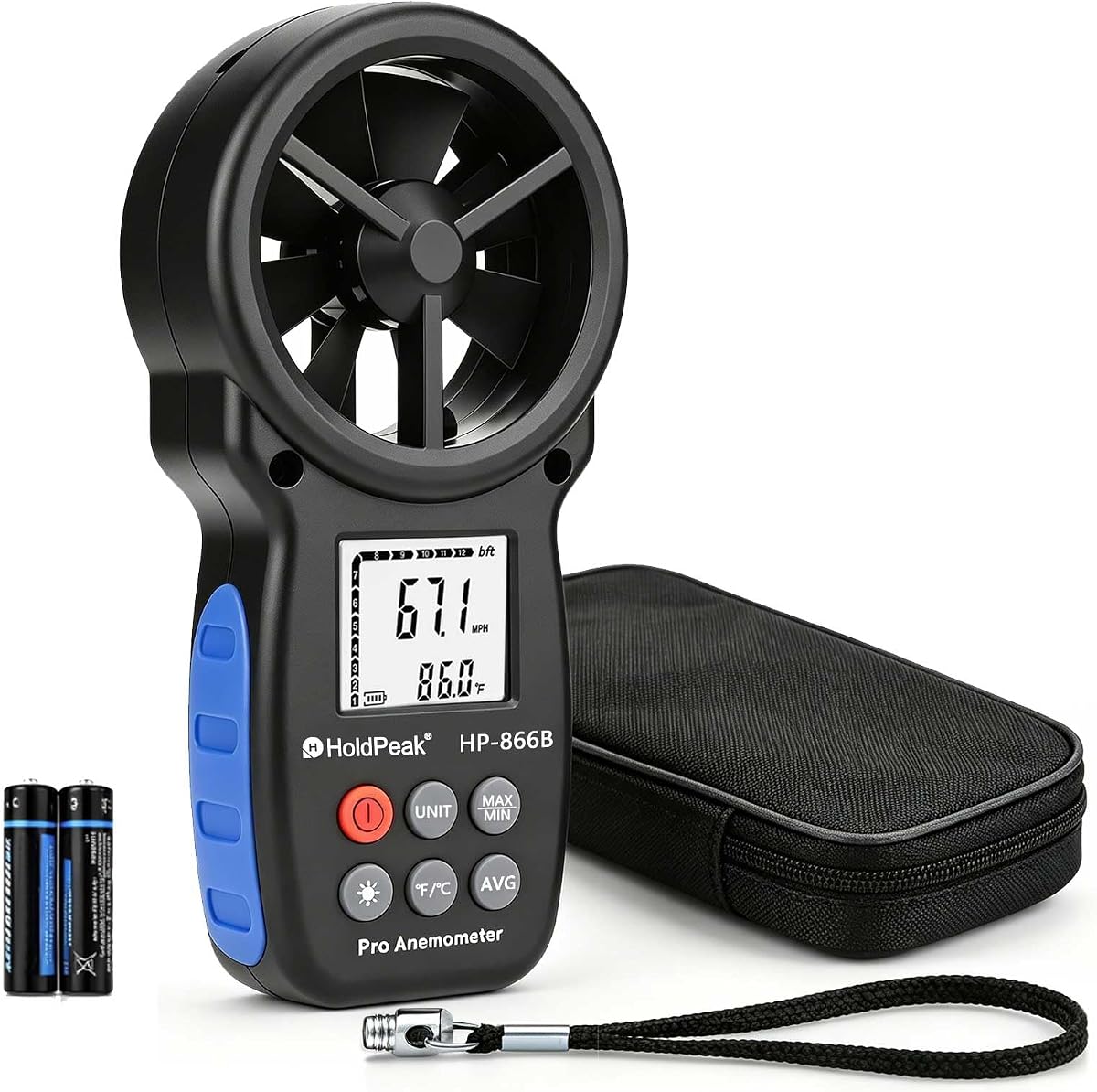
The HoldPeak 866B is a workhorse favored by HVAC professionals for its reliable performance in demanding environments. Its dual temp sensors and eight vanes ensure accurate detection of wind conditions in real time.
We may earn a commission when you buy through this link, at no additional cost to you.
The included hand strap and waterproof carrying pouch make it easy to transport safely to job sites. The screwdriver tool helps with adjustments, showing a thoughtful approach to packaging accessories.
While the design is simple, it focuses on core functionality without unnecessary complexity. It is a trusted tool for those who prioritize measurement accuracy over modern bells and whistles.
Choose this model if you need a rugged device for industrial or professional HVAC work. Its durability and consistent performance make it a staple in many technician toolkits.
The precision sensors help technicians ensure ventilation systems are operating at optimal efficiency levels.
Includes carrying pouch and strap to protect your investment during transport to various locations.
We may earn a commission when you buy through this link, at no additional cost to you.
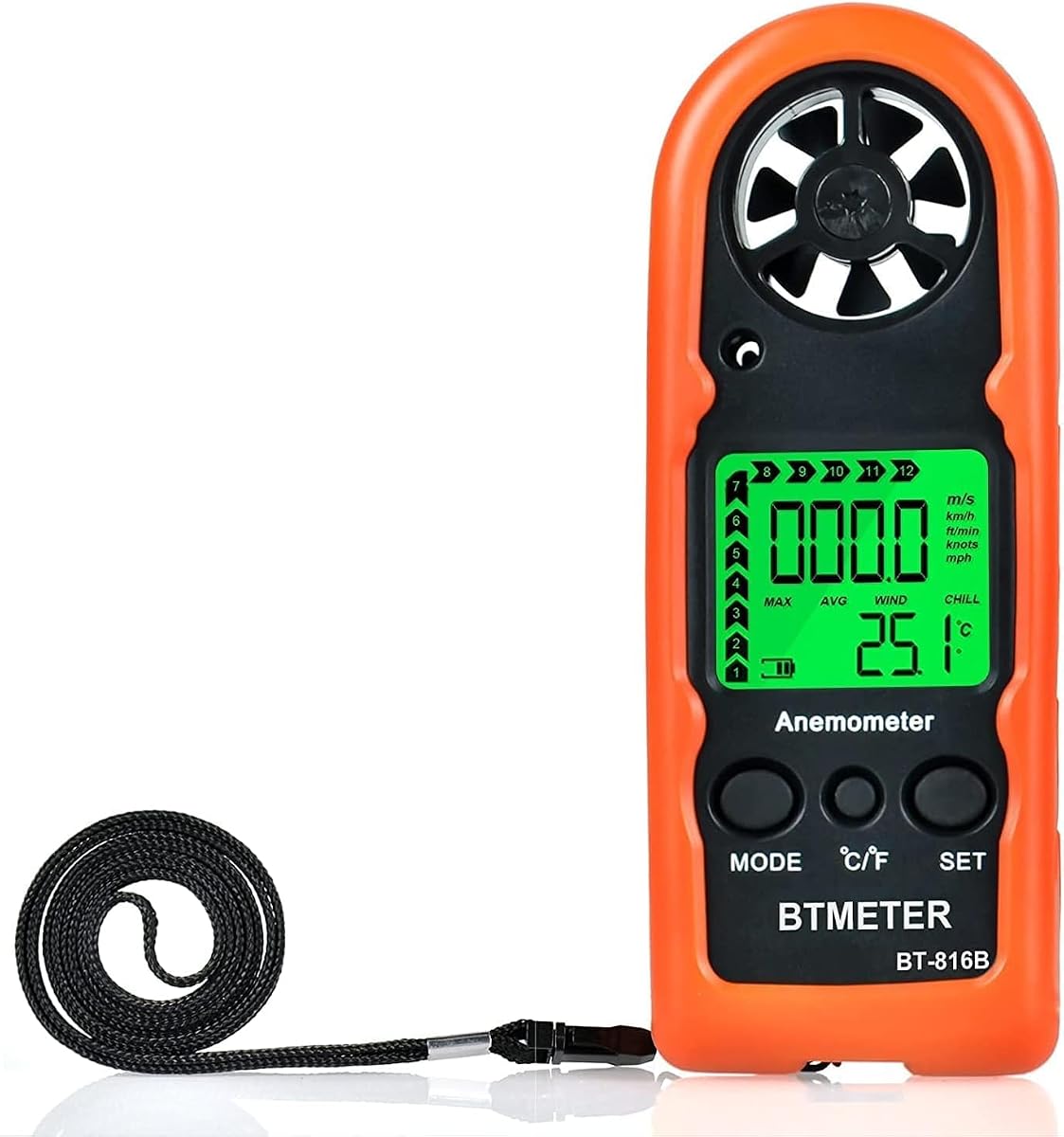
The BTMETER BT-816B is designed for portability and ease of use in various outdoor settings. At only 53 grams, it is one of the lightest options available, making it ideal for hiking or biking.
We may earn a commission when you buy through this link, at no additional cost to you.
It includes a wind chill measurement feature which is crucial for assessing cold exposure risks during outdoor activities. The lanyard ensures you can keep it secure around your neck while moving.
While it has a slightly higher tolerance range than premium models, it remains reliable for general use. The backlight screen allows for night time measurements without needing external light sources.
This model is perfect for travelers or outdoor enthusiasts who need a lightweight backup device. It balances cost and performance effectively for casual wind monitoring tasks.
Its small size allows you to stash it in a pocket without adding noticeable weight to your gear.
Wind chill data helps you plan safe stops and gear choices during cold weather activities.
We may earn a commission when you buy through this link, at no additional cost to you.
The Soonkoda 3 in 1 offers a functional wind measurement tool at an entry-level price point. It covers essential features like speed temperature and wind level to meet basic needs without complexity.
We may earn a commission when you buy through this link, at no additional cost to you.
The double line display ensures both wind speed and temperature are visible at once. The auto power off function helps maintain battery life during intermittent usage periods.
While it is not built for heavy industrial use, it performs well for household or hobbyist projects. The liquid crystal display is clear enough for casual readings in daylight.
Choose this if you need a disposable or secondary device for light tasks. It is a practical solution for occasional users who want reliable data without a significant investment.
The low cost allows you to buy one for home and another for outdoor activities.
Beaufort scale provides quick context for understanding wind strength during sailing or fishing.
We may earn a commission when you buy through this link, at no additional cost to you.
The AEM01S Anemometer stands out for its visual alert system that changes backlight color based on wind danger levels. This feature provides an immediate warning without requiring you to read numbers constantly.
We may earn a commission when you buy through this link, at no additional cost to you.
Sampling every 0.5 seconds ensures that rapid gusts are captured accurately in real time. The ergonomic housing makes it comfortable to hold during long periods of monitoring.
A one year free replacement service adds value by protecting your purchase against defects. The protective blade housing also helps prevent damage when transporting the device.
This model is ideal for safety-conscious users or those working in variable wind environments. The visual alerts reduce the risk of missing dangerous wind conditions unexpectedly.
Color changes allow you to react quickly to dangerous wind levels without stopping your work.
Fast sampling rates ensure you get immediate feedback when wind conditions change rapidly.
We may earn a commission when you buy through this link, at no additional cost to you.
The Proster Digital Anemometer is tailored for professionals who need to calculate air flow rates like CFM and CMM. Its specific modes simplify HVAC testing tasks significantly.
We may earn a commission when you buy through this link, at no additional cost to you.
The large LCD display ensures data is legible in dark duct spaces. Including a 9V battery means you have a long-lasting power source right out of the box.
While 9V batteries are less common than AA or AAA, they often provide longer operational times. The reading hold function helps you record data accurately during maintenance checks.
Select this model if your primary work involves air flow analysis in buildings. It delivers the specific metrics required for professional HVAC compliance and maintenance.
CFM and CMM modes allow direct calculation of air volume without manual math steps.
9V batteries typically last longer than smaller cells during continuous professional use.
We may earn a commission when you buy through this link, at no additional cost to you.
The VEVOR Split Handheld Anemometer offers advanced tech features like USB data export for detailed analysis. This makes it a strong choice for researchers or technicians logging data over time.
We may earn a commission when you buy through this link, at no additional cost to you.
The included extendable cord allows you to take measurements in hard to reach places without physical strain. The IP44 rating provides a basic level of weather protection for outdoor tasks.
While the setup may be slightly complex with software installation, the ability to save data digitally is a major advantage. The storage bag helps keep all accessories organized and safe.
Choose this if you need to document and analyze trends in wind data. The extra features support more technical workflows than standard handheld units.
Connect to PC for digital export enabling detailed reports and long term tracking.
Extendable cord lets you measure airflow in high ducts or deep recesses safely.
We may earn a commission when you buy through this link, at no additional cost to you.
Selecting the right anemometer depends on your specific needs and environment. This guide breaks down key factors to help you choose a device that delivers accurate and reliable results.
Accuracy determines how close your reading is to the actual wind speed. Professional models often offer tolerance within 2% whereas budget models may be around 5%. Ensure the device covers the speed range you typically encounter.
Look for a range that starts low enough for gentle breezes and high enough for strong gusts. A wider range ensures versatility across different tasks and weather conditions.
A clear display is critical when checking data in bright sunlight or darkness. LCD screens with backlighting allow you to read values without squinting or using a flashlight.
Choose a screen size that matches your comfort level. Larger displays are easier to read quickly but may increase the device size.
Different industries require different units like mph for general use or CFM for HVAC. Check if the device allows switching between m/s, km/h, knots, and ft/min easily.
Ensure the device supports the units you need for your specific reporting or operational requirements. Too many units can clutter the interface while too few may limit utility.
If you use the anemometer outdoors or in industrial settings, water resistance and a sturdy casing are important. Look for materials that resist drops and harsh conditions.
Rubberized grips and protective pouches add to the device longevity. A durable device saves money in the long run by reducing replacement frequency.
Most anemometers run on standard batteries like AAA or 9V. Consider the availability of replacements and how often you need to change them.
Auto power off features help conserve energy. Rechargeable options are becoming available but standard batteries are often more practical for immediate replacement.
Features like temperature humidity and wind chill sensors provide a complete weather picture. Some models include wind level scales like Beaufort for easy context.
Decide which extras are truly necessary for your use. Too many features can complicate simple tasks but useful ones add significant value.
A lightweight device is easier to carry during hiking or drone operations. Heavy models may cause fatigue during prolonged holding.
Check if the device includes a lanyard or carrying case. Portability is key for users who move frequently between locations.
Budget models offer basic functions while premium ones provide long-term support. A good warranty protects your investment against manufacturing defects.
Consider the total cost including batteries and accessories. A slightly higher initial price may be worth it for better reliability and support.
To ensure accurate readings, hold the anemometer steady and away from your body to avoid heat or wind interference. Keep the fan blades clear of obstructions like fingers or clothing.
After each use, wipe the device with a soft cloth to remove dust and moisture. Store it in a dry place to prevent corrosion on electronic parts.
Regularly check battery levels and replace them when the low indicator appears. If the device includes sensors, allow time for them to adjust to new environments before taking measurements.
Accuracy depends on tolerance levels typically ranging from 2% to 5%. Professional models like the BTMETER BT-100 and HoldPeak 866B offer high precision suitable for HVAC tasks. Always calibrate your device regularly to maintain accuracy.
Temperature sensors are useful for calculating wind chill which helps assess safety in cold conditions. If you work outdoors or in HVAC, this extra data provides valuable context. For simple speed checks, it may not be necessary.
Most handheld anemometers are factory calibrated and do not need manual calibration. However you can verify accuracy by comparing readings with a trusted weather station. Some high end models offer self calibration features.
AAA batteries are common and easy to find making them ideal for most handheld devices. Rechargeable batteries are eco friendly but standard alkaline options are often more reliable for occasional use. Check the manual for specific requirements.
Most anemometers are water resistant but not fully waterproof. Avoid submerging the device in water to prevent damage. Some models have IP44 ratings to handle light rain but drying them promptly is always recommended.
Battery life varies by usage but typically lasts several weeks with moderate use. Devices with auto power off features conserve energy effectively. Keep spare batteries handy to avoid interruption during important measurements.
The BTMETER BT-100 and Caldwell Wind Wizard II stand out as top choices for professionals seeking accuracy and durability. Budget buyers will find excellent value in the Mcbazel 3 in 1 for general tasks.
Prioritize features that match your specific needs such as unit options waterproofing or display size. A device with the right functionality saves time and ensures safety across various applications.
Remember to verify current prices and stock levels before purchasing. Our guide helps you narrow down options but market changes may affect availability and costs in the future.