
ELEGOO UNO R3 Smart Robot Car Kit V4 with Camera
4.5Editor score
Live FPV video camera control
Line tracking and obstacle avoidance
Rechargeable lithium-ion battery included
Discover the top electronics kits for teens in October 2026. This guide compares Arduino starter sets, robot cars, and soldering projects for STEM learning.
Finding the right electronics kit for teens involves balancing complexity, safety, and educational value. These kits introduce coding and circuitry through hands-on projects that spark curiosity. The best options provide clear instructions while allowing room for creativity and modification.
We evaluated ten highly rated kits based on component variety, tutorial quality, and project diversity. Our comparison focuses on kits that support progressive learning from basic LED blinking to complex robotics. Each pick offers unique benefits for different skill levels and interests.
Each review highlights key features, pros, and cons to help you make an informed decision. Note that prices and availability may change frequently due to market demand. Always check the latest details on the product page before purchasing for your student.
4.5Editor score

4.7Editor score
4.8Editor score
This side-by-side comparison highlights the core specifications of each kit to help you choose the right fit for your teen's skill level and interests.


This comprehensive kit stands out as a top choice for serious student builders interested in Arduino programming. With a 4.7 rating and extensive components, it supports complex projects beyond basic blinking LEDs. The included tutorial helps users progress from simple tasks to advanced robotics.
We may earn a commission when you buy through this link, at no additional cost to you.
The Mega 2560 board offers significantly more memory and pins than standard boards, allowing for projects that combine multiple sensors and displays. Components like RFID readers and real-time clocks enable sophisticated builds. The storage case keeps parts organized, reducing frustration during assembly.
While the sheer number of parts can be overwhelming at first, the guided lessons break down tasks effectively. Users should note that managing such a large kit requires patience. However, the trade-off is access to professional-grade capabilities in a classroom or home lab.
Ideal for teens ready to tackle complex engineering challenges, this kit offers long-term value. It grows with the learner, supporting advanced coding and hardware integration. If your student is passionate about electronics, this is a worthwhile investment.
The Mega 2560 R3 provides ample pins for connecting many sensors simultaneously without complex multiplexing.
Pre-soldered modules and a small-parts box reduce setup time significantly compared to loose component kits.
We may earn a commission when you buy through this link, at no additional cost to you.
This UNO R3 kit balances cost and functionality perfectly for beginners. It features a solid 4.7 rating and includes essential components like LCD displays and RFID modules. The lack of soldering requirements makes it accessible for first-time users.
We may earn a commission when you buy through this link, at no additional cost to you.
Students can start with basic LED projects and progress to motor control and environmental monitoring. The included 9V battery and power module allow testing without constant USB connection. The organized storage case helps maintain order between sessions.
The main limitation is the UNO board's smaller memory compared to the Mega model. This restricts very large codebases or complex multi-sensor projects. However, for foundational learning and hobby projects, the capacity is sufficient.
Recommended for teens starting their electronics journey, this kit offers a gentle learning curve. It provides all the tools needed to understand circuits without breaking the budget. It is a solid foundation for future technical pursuits.
Solderless breadboard and pre-soldered modules ensure quick setup and focus on logic over wiring.
Projects cover motion detection and motor control, offering broad exposure to electronics principles.
We may earn a commission when you buy through this link, at no additional cost to you.
This robot car kit pushes boundaries with onboard Wi-Fi camera capabilities. Rated 4.5, it brings robotics into the modern era with FPV streaming. The included ESP32 module enhances connectivity and processing power for advanced coding tasks.
We may earn a commission when you buy through this link, at no additional cost to you.
Teens can explore obstacle avoidance and line tracking using ultrasonic and infrared sensors. The ability to view live video feed adds a layer of immersion not found in standard kits. Keyed connectors simplify wiring, reducing frustration for builders.
While the cost is higher, the complexity justifies the investment for older teens. Setup involves more steps than simple kits, requiring patience to ensure connections are secure. The reward is a functional, intelligent robot car.
Best for users ready to tackle robotics and wireless communication, this kit delivers professional results. It fosters problem-solving skills through real-world application. Consider this if your student seeks an engaging, high-tech challenge.
The onboard camera allows for remote viewing via the ELEGOO app, creating a drone-like experience.
Code can be modified to add custom reactions, encouraging creative engineering beyond the tutorials.
We may earn a commission when you buy through this link, at no additional cost to you.
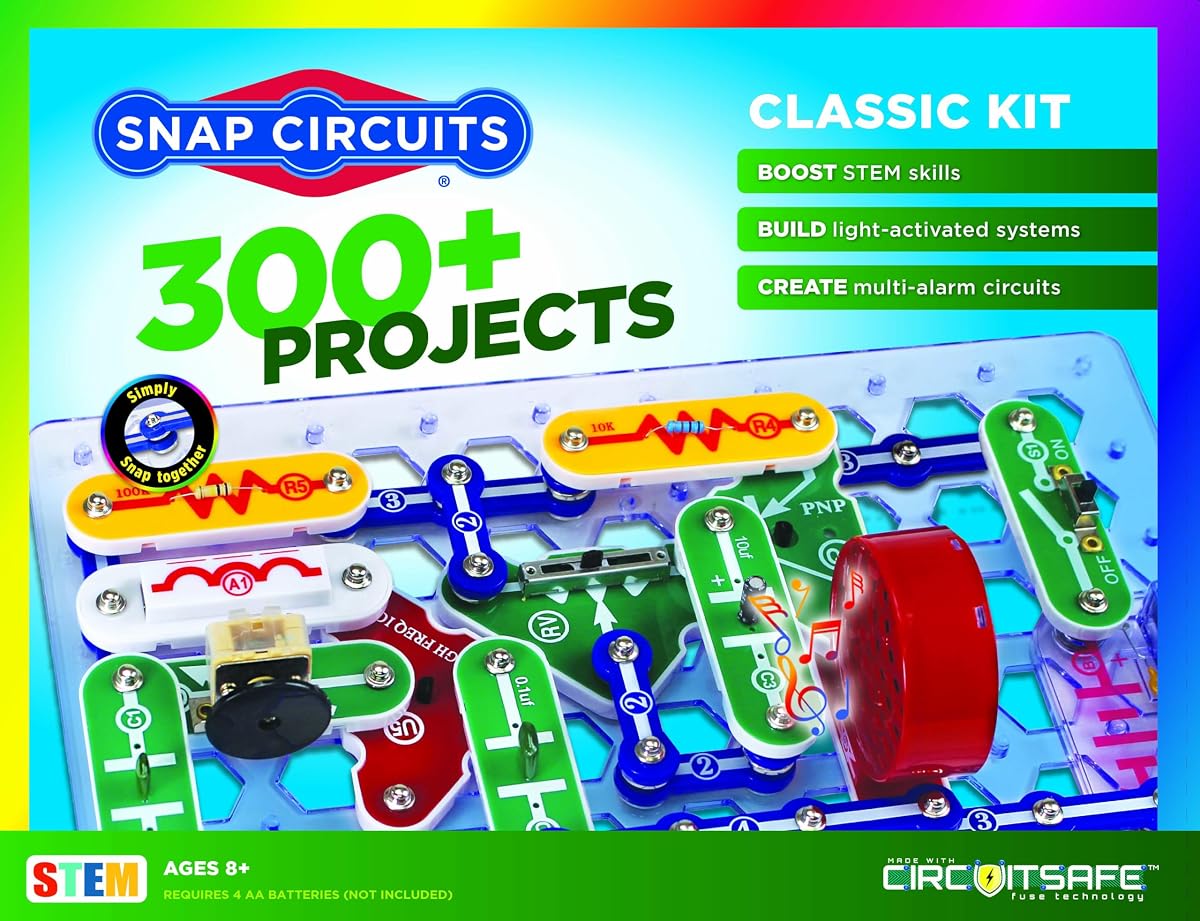
Snap Circuits offers a unique approach to electronics learning through snap-together parts. With a high 4.8 rating, it is designed for rapid prototyping without tools. It builds foundational knowledge of circuits safely.
We may earn a commission when you buy through this link, at no additional cost to you.
The manual guides users through 300 different projects, from alarms to radios. This variety keeps teens engaged for extended periods. The color-coded grid ensures correct placement, minimizing errors during assembly.
The main drawback is the lack of coding components compared to Arduino kits. It focuses on analog circuits rather than microcontroller logic. This may limit appeal for teens interested specifically in programming.
Ideal for introducing electrical concepts to younger or new learners, this kit is highly reliable. It requires minimal setup and offers immediate gratification. Perfect for a family science evening or school project.
No soldering or tools needed ensures safety for younger teens exploring electronics for the first time.
Multiple awards from education experts validate its effectiveness in teaching engineering principles.
We may earn a commission when you buy through this link, at no additional cost to you.
This kit targets teens ready to learn soldering through a practical project. With a 3.9 rating, it focuses on building a usable Bluetooth speaker. It bridges the gap between theory and real-world application.
We may earn a commission when you buy through this link, at no additional cost to you.
The dual speakers and acrylic case allow for a professional-looking finish. Teens learn amplifier circuits and component placement. The included manual guides assembly, though manual text may vary by batch.
Success depends heavily on soldering technique and patience. Teens with zero experience might find the assembly challenging without supervision. However, mastering the skill provides a significant confidence boost.
Best for teens seeking a tactile, hands-on challenge, this kit results in a usable device. It is a great addition to a workshop setup. Consider pairing it with a soldering iron practice station.
The project teaches soldering techniques that are essential for more advanced electronics work later.
Support for Bluetooth and TF card offers versatile ways to enjoy music after completion.
We may earn a commission when you buy through this link, at no additional cost to you.
This kit simplifies the start of an electronics journey with a focus on guided lessons. Rated 4.7, it offers a straightforward path for beginners. The pre-soldered LCD reduces setup frustration significantly.
We may earn a commission when you buy through this link, at no additional cost to you.
Students follow lessons to control LEDs, motors, and sensors. The PDF tutorial provides clear steps for Arduino IDE setup. This makes it easy to transition from hardware to software quickly.
While the component count is lower than the Mega kit, it covers the essentials for learning logic. It lacks some extra sensors found in larger packages. Still, it is sufficient for a complete introduction.
Recommended for families homeschooling or clubs needing a quick start, this kit is reliable. It removes barriers to entry with thoughtful design. Ideal for teens ready to code their first project.
Pre-soldered headers on the LCD eliminate complex wiring steps that often confuse beginners.
Example code helps users understand the logic behind controlling hardware components immediately.
We may earn a commission when you buy through this link, at no additional cost to you.
This kit combines soldering practice with an engaging light show feature. Rated 4.7, it offers visual feedback that makes learning enjoyable. The LEDs pulse with music, adding a creative dimension.
We may earn a commission when you buy through this link, at no additional cost to you.
The instruction manual uses high-clarity photos for every step, aiding assembly. Teens learn about circuits while building a functional speaker. The transparent case showcases internal components beautifully.
Basic soldering experience is required, making it less suitable for absolute beginners. Teens must handle components carefully to ensure the visualizer works. This trade-off adds to the satisfaction of a working device.
Best for teens who enjoy aesthetics alongside engineering, this kit offers a rewarding build. The visualizer adds fun to standard audio projects. It is great for a dorm room or bedroom desk.
The light show creates an immediate connection between sound output and circuit function.
High-resolution photos in the manual reduce guesswork during component placement.
We may earn a commission when you buy through this link, at no additional cost to you.
This kit introduces teens to physics through a musical instrument. Rated 4.5, it uses electric fields to create sound without contact. It teaches capacitance and electronics principles in a unique way.
We may earn a commission when you buy through this link, at no additional cost to you.
The instruction booklet breaks down complex concepts into simple steps. Teens build without soldering, focusing on board placement. The result is a working theremin that can be played with hand gestures.
While creative, it has fewer general application uses than a robot or sensor kit. However, for music and physics enthusiasts, it is unmatched. The project sparks curiosity about invisible forces.
Ideal for teens with artistic or scientific interests, this kit bridges gaps between art and science. It serves as a great conversation starter at school. Consider it for a unique science fair project.
The project demonstrates electrical capacitance and field interaction through audible sound.
Breadboard assembly avoids the difficulty of soldering for beginners.
We may earn a commission when you buy through this link, at no additional cost to you.
This kit serves as an essential expansion for existing Arduino users. With a 4.7 rating, it provides access to diverse sensors like flame and tilt detectors. It is perfect for testing multiple inputs.
We may earn a commission when you buy through this link, at no additional cost to you.
Teens can add motion sensing and environmental monitoring to their projects. The tutorial materials include wiring diagrams for various boards. This flexibility makes it valuable for different tech stacks.
Since it is an expansion kit, users need a compatible microcontroller and USB cable separately. This can increase the total cost if not already owned. However, it is affordable compared to buying sensors individually.
Best for teens ready to build custom IoT devices, this kit offers great utility. It enables rapid prototyping of complex systems. Consider it as a next step after a base starter kit.
Includes touch, light, and temperature sensors for broad experimental possibilities.
Example code and datasheets help beginners understand pin requirements quickly.
We may earn a commission when you buy through this link, at no additional cost to you.
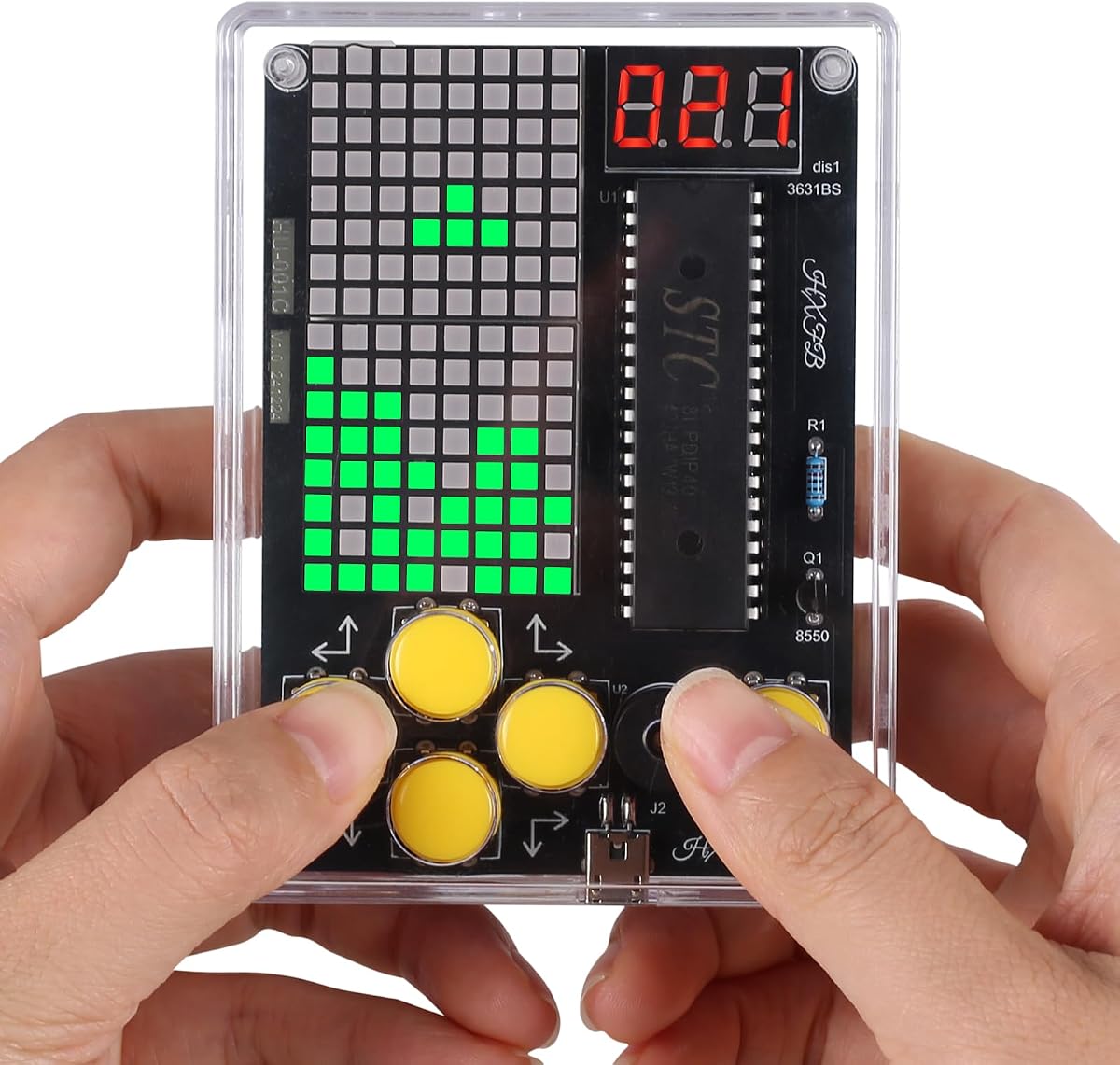
This kit combines soldering practice with interactive game mechanics. Rated 4.1, it offers three difficulty levels to match experience. Teens learn assembly while building functional components.
We may earn a commission when you buy through this link, at no additional cost to you.
Video guidance helps visualize complex steps that text alone may not. The project results in a device with multiple interactive functions. It is suitable for individual practice or workshops.
The game functions are limited compared to programmable kits. However, the focus on manual assembly provides tactile skills. Teens need to be at least 15 to handle soldering safely.
Best for teens looking to sharpen soldering skills through fun challenges, this kit is useful. It is ideal for supervised group activities. Consider it for a structured workshop session.
Three difficulty levels allow learners to grow gradually without feeling overwhelmed.
Video guidance simplifies complex assembly steps significantly.
We may earn a commission when you buy through this link, at no additional cost to you.
Selecting the right kit involves considering skill level, budget, and specific interests. This guide breaks down key factors to help you find the perfect match for your teen.
Some kits require soldering, which is a valuable skill but may intimidate beginners. If your teen has no prior experience, choose a solderless kit like Snap Circuits to build confidence before moving to tools.
Arduino-based kits allow for coding, while others focus on analog electronics. Assess if your teen enjoys software development or prefers pure hardware assembly to narrow down your options effectively.
A diverse selection of parts keeps learning engaging. Look for kits that include motors, sensors, and displays to ensure projects remain challenging and interesting over time.
Clear tutorials with diagrams are crucial for independent learning. Kits that include videos or PDF guides help teens troubleshoot issues without constant adult supervision.
Consider if the kit allows for future upgrades. Some boards like the Mega support more add-ons, ensuring the kit remains useful as skills improve.
Prices range from budget-friendly options to advanced sets. Determine how much you are willing to spend on learning tools that offer long-term educational value.
Always start by reading the manual and organizing components. Use a static-free workspace to prevent damage to sensitive microchips and boards.
When soldering, ensure proper ventilation and use a stand to avoid burns. Clean excess solder from tools regularly to maintain performance.
Store all unused parts in labeled containers. Keeping the kit organized ensures that future projects start smoothly without losing small pieces.
No prior knowledge is required for beginner kits, as they include tutorials. Advanced projects may benefit from basic math or logic skills. Most materials are designed to teach as you build.
Yes, most kits are safe with proper supervision. Soldering kits require age-appropriate safety gear. Always follow guidelines regarding hot tools and batteries.
Many kits are modular, allowing you to add more sensors or boards. Check compatibility with standard Arduino or Raspberry Pi components for future expansion.
Basic projects may take an hour, while complex builds require several sessions. It depends on the teen's experience level and attention to detail during assembly.
Most Arduino software is cross-platform and works on both systems. Check specific software requirements in the product description to ensure compatibility.
Keep the storage case organized to prevent loss. Manufacturers often sell replacement components separately if parts go missing over time.
We highlighted top picks including the Mega 2560 Starter Kit and Robot Car Kit for advanced teens. These options offer the best balance of education and engagement.
Prioritize kits that match your teen's current skill level to avoid frustration. Start simple and move to complex builds as confidence grows naturally.
Always verify current pricing and availability before buying. Prices fluctuate frequently, so check the latest listings for the best deal on your chosen product.