
Captel MDL 200
Affordable captioned phone option
Standard corded design
Basic hearing impaired support
This guide compares the top captioned telephones for hearing impaired users, focusing on clarity, features, and usability to help you choose the right device.
Finding the right communication tool is essential for those with hearing loss. Captioned telephones offer real-time text to support audio, ensuring no word is missed during important calls with family or medical providers.
We evaluated ten top-rated models based on amplification levels, screen size, ease of use, and reliability. Our comparison highlights devices that balance advanced captioning technology with simple interfaces for seniors and hard-of-hearing individuals.
Each pick includes detailed specs, pros, cons, and user feedback to guide your decision. Prices and availability change frequently, so check current listings before purchasing to ensure you get the best deal on these vital communication tools.

4.3Editor score

This table provides a side-by-side overview of the top ten captioned and amplified telephones for hearing impaired users, highlighting key specifications to help you compare features at a glance.




The Hamilton CapTel 2400iSPNBT stands out as the top choice for captioned telephones for hearing impaired users. With a 4.3-star rating, it offers real-time captioning that allows you to listen and read conversations simultaneously. The large touchscreen ensures captions are easy to read, making it ideal for seniors.
We may earn a commission when you buy through this link, at no additional cost to you.
This device turns everyday calls into clear, confident conversations by combining amplified sound with text support. It features up to 40dB of volume control and hearing aid compatibility. The auto and assisted caption options provide flexibility, while the built-in voicemail displays messages directly on the screen for later review.
While it requires high-speed internet and FCC certification, these requirements ensure reliable captioning service. The need for registration might be a minor hurdle, but the 24/7 US nationwide support at no cost makes it worthwhile. Users appreciate the comfort of customizable tones and sizes.
Anyone needing reliable captioning for home use should consider this model. It is particularly suitable for those who want to stay connected with loved ones without missing words. The combination of audio and visual support makes it the best overall option for hard-of-hearing individuals.
The real-time captions ensure you never miss a word during important conversations with family or doctors.
Volume control up to 40dB and hearing aid compatibility make listening easier for various hearing loss levels.
We may earn a commission when you buy through this link, at no additional cost to you.
The Geemarc Ampli550 is designed to prevent missing incoming calls at home again. With a 4.1 rating, it offers ultra-loud sound and visual alerts. This makes it a strong choice for those who struggle to hear traditional ringtones or need clear, loud audio for conversation.
We may earn a commission when you buy through this link, at no additional cost to you.
It features up to 55dB of TrueSound amplification and a 95dB ringer with a flashing strobe. The talking caller ID and keys provide auditory feedback, helping users dial confidently. The backlit LCD screen and large keypad ensure visibility, which is crucial for users with low vision.
While it lacks the text captions of the CapTel, its sound focus is unmatched. The price is higher than some basic models, but the accessibility features justify the cost. The one-touch memory buttons make saving emergency contacts simple for seniors.
This phone is ideal for hard-of-hearing individuals who prioritize sound volume over text. It makes a great gift for birthdays or holidays. The award-winning brand reputation adds trust, ensuring you get a reliable device for daily communication needs.
The combination of a loud ringer and strobe light ensures you never miss a call in noisy environments.
Talking keys and caller ID provide extra feedback to confirm who you are calling or who is calling.
We may earn a commission when you buy through this link, at no additional cost to you.
The Captel MDL 200 offers an accessible entry point into captioned telephones for hearing impaired users. While details are minimal, its low price makes it a viable option for those on a budget. It supports captioning services to help clarify conversations.
We may earn a commission when you buy through this link, at no additional cost to you.
This model focuses on essential functionality with a standard corded design. It provides the basics needed to make and receive calls with some support for hearing difficulties. The simplicity can be beneficial for seniors who do not need complex features.
Users should expect fewer features compared to premium models like the CapTel. There is no large touchscreen or advanced amplification mentioned. However, for those who need a simple device without high costs, it serves its purpose well for daily use.
If you are looking for an affordable way to try captioned services, this is a good starting point. It is suitable for basic home use where simplicity is key. The limited features are a trade-off for the lower price, making it budget-friendly.
At a very affordable price, this model provides basic captioned support without high financial commitment.
The straightforward design ensures that users do not get overwhelmed by complex settings or menus.
We may earn a commission when you buy through this link, at no additional cost to you.
The Clarity AltoPlus Amplified Phone is a high-end solution for those with mild to severe hearing loss. It is TIA-4953 certified, ensuring it meets strict standards for amplification. With up to 53dB of boost, it delivers clear sound for difficult listening environments.
We may earn a commission when you buy through this link, at no additional cost to you.
Its standout feature is outgoing speech amplification, which makes your voice louder for the other caller. The ringer hits 100dB with a visual indicator, ensuring you never miss a call. The talking keypad and caller ID help with navigation, especially for those with arthritis.
While it lacks text captions, the audio clarity is superior. It requires optional accessories like neckloops for full hearing aid integration. The price is high, but the TIA certification and boost override make it a premium tool for professional or home use.
This phone is best for those needing maximum volume rather than text. The ergonomic design accommodates users with limited dexterity. If you need a certified, loud phone for severe hearing loss, this premium model is a strong contender in the market.
TIA-4953 certification means this device is tested and approved for even severe hearing loss scenarios.
The outgoing speech amplification ensures the person on the other end hears you clearly as well.
We may earn a commission when you buy through this link, at no additional cost to you.
The Serene Innovations SI-CL-65 offers a cordless option with HD audio and talking caller ID. This model is designed for seniors who need a mix of audio support and mobility. The cordless handset allows movement around the home while answering calls.
We may earn a commission when you buy through this link, at no additional cost to you.
It features high-definition audio which reduces distortion during conversations. The talking ID ensures you know who is calling before picking up. While it does not provide text captions, the clarity of sound is a significant benefit for those with moderate hearing loss.
Details on amplification are not specified, but the HD focus suggests optimized sound. It is a practical choice for those who find corded phones restrictive. The senior-friendly design likely includes large buttons for easy dialing and use.
If mobility is a priority, this cordless model is worth considering. It balances sound quality with freedom of movement. Users looking for a modern cordless experience with auditory supports will find this device useful for daily calls.
A cordless handset allows you to move around the house without losing connection or being tethered.
HD audio ensures that voices are crisp and clear, reducing the strain of listening.
We may earn a commission when you buy through this link, at no additional cost to you.
The VTech SN5147 combines a reliable corded base with a cordless handset for flexibility. With a 4-star rating, it is ideal for seniors and hard-of-hearing users who value mobility. The hybrid system ensures calls are not missed even during power outages.
We may earn a commission when you buy through this link, at no additional cost to you.
Key features include oversized buttons and photo speed dial slots to call loved ones with one touch. It offers a 50dB volume boost and a 90dB ringer with visual alerts. The answer machine records messages with slow playback for better clarity when listening.
While it does not provide text captions, its audio and visual aids are robust. The call blocker protects against robocalls, which is common for seniors. Expandability to four handsets makes it a good option for larger homes with multiple users.
This phone is perfect for those who want cordless convenience with a secure base line. The photo dial feature is particularly helpful for those with memory issues. It prioritizes sound and visual cues over text, making it accessible for various needs.
Save photos of family members on speed dial slots to make calls with a single touch.
Block up to 1000 unwanted numbers to reduce interruptions and stress from spam calls.
We may earn a commission when you buy through this link, at no additional cost to you.
The Panasonic KX-TGM420W system offers a robust cordless experience with a 4.3 rating. It includes a voice volume booster that amplifies caller voice up to 40dB. This feature helps users hear better in noisy environments where standard audio fails.
We may earn a commission when you buy through this link, at no additional cost to you.
It also features noise reduction to suppress background interference for clearer conversations. The slow talk function slows speech in real time, which is helpful for understanding fast talkers. Visual ringers and a big white backlit LCD enhance visibility during use.
While it lacks text captions, the audio processing tools are significant. It expands to six handsets, making it suitable for multi-room homes. The talking keypad helps users verify they have pressed the right numbers when dialing.
This system is ideal for users needing extra audio clarity and volume. It is particularly good for those in noisy households or with moderate hearing loss. The combination of boost and noise reduction makes it a top pick for cordless phones.
Slow talk helps users understand every word by slowing down speech speed in real time.
Suppressed background noise interference ensures that you focus only on the voice you are trying to hear.
We may earn a commission when you buy through this link, at no additional cost to you.
The SWISSVOICE Big Button Phone is designed to simplify lives for the hard of hearing and sight. It features photo memory buttons that show who you are calling, making it easier for those with vision loss. The set includes both a corded and cordless handset.
We may earn a commission when you buy through this link, at no additional cost to you.
Its loud 90dB ringer and hearing aid compatibility ensure you can hear calls clearly. The large buttons display photos and numbers, which helps those with unsteady hands or low vision. The call block feature helps prevent unwanted contacts.
While it has a lower rating, its focus on visual memory buttons is unique. It is a practical gift for elderly relatives. The Swissvoice brand specializes in accessibility products, ensuring that the design meets real-world needs for connectivity.
If visual dialing is a priority, this model is worth considering. It supports independence by making contacts easy to recognize. The extra handset adds value, allowing for more flexibility in where you use the phone at home.
Photo buttons let you see who you are calling before you press the button, reducing mistakes.
Having a corded and cordless handset lets you choose the best placement for your daily calls.
We may earn a commission when you buy through this link, at no additional cost to you.
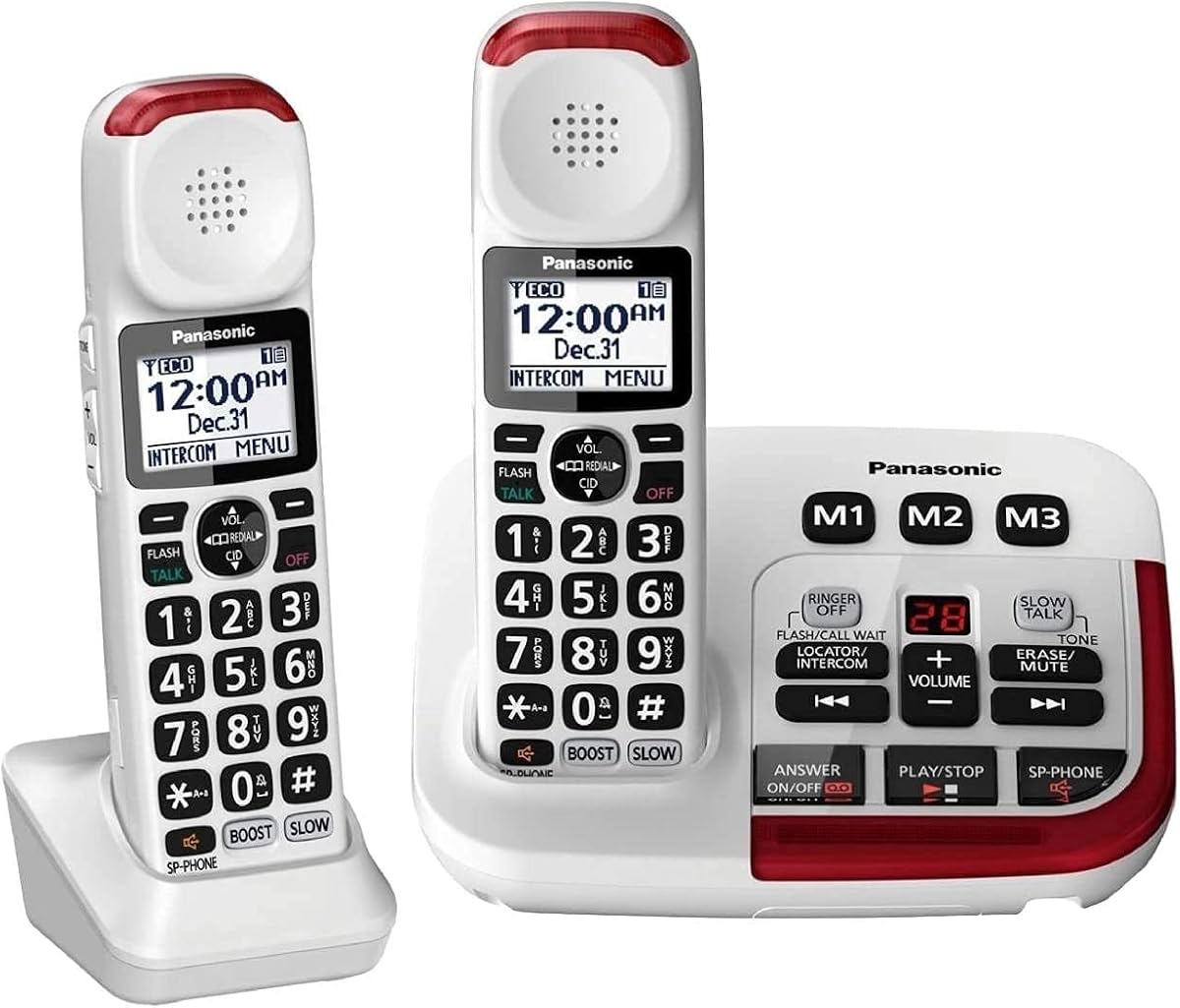
This Panasonic system provides two handsets and the same advanced audio features as the single unit version. With a 4.3 rating, it is perfect for households needing multiple devices. The volume booster and noise reduction make conversations clearer for hard-of-hearing users.
We may earn a commission when you buy through this link, at no additional cost to you.
The slow talk function and visual ringers enhance usability. It expands to six handsets, making it scalable. The big white backlit LCD and LED ringers ensure visibility even in low light. The digital answering machine stores messages with clarity.
While it does not offer text captions, the audio tools are powerful. It is a comprehensive solution for families where multiple people need accessible phones. The two-handset bundle offers immediate value without buying extra units separately.
If you need coverage in multiple rooms, this bundle is efficient. It prioritizes audio clarity with volume boost and slow talk. Users who need mobility and support in different parts of the house will find this package useful for all members.
Expandability to six handsets allows you to add devices as your household needs grow over time.
Having two handsets from the start saves money and ensures every room has a functional phone.
We may earn a commission when you buy through this link, at no additional cost to you.
This amplified landline phone offers a 100dB ringer and LED alerts to ensure you never miss a call. It is designed specifically for seniors with mild to moderate hearing loss. The photo speed dial lets you store images of family members for one-touch calling.
We may earn a commission when you buy through this link, at no additional cost to you.
It features a headset volume control and hearing aid compatibility for clear listening. The hands-free speakerphone makes conversations easier. The LED flash provides a visual reminder in low-light conditions. It is sturdy and suitable for desk use.
The manual note about programming may require patience. While not meant for profound loss, it covers common needs. The 1-year support service adds confidence. It is a practical choice for those who want loud alerts and easy dialing.
This phone is great for daily use in home settings. It balances loud audio with visual cues like flashing lights. If you need a simple, loud device for family contact or emergencies, this is a solid option with strong alert features.
The LED flashing light and 100dB ringer ensure you see and hear every incoming call.
Photo memory keys make it easy to call loved ones without needing to remember phone numbers.
We may earn a commission when you buy through this link, at no additional cost to you.
Choosing the right phone requires understanding your hearing needs, budget, and desired features. This guide covers the most important factors to consider before you buy.
Captioned telephones use voice-to-text technology to display what is being said in real time. Ensure the model supports a reliable captioning service in your area. Some services require high-speed internet or specific registration to work properly.
Look for phones with volume control ranging from 25dB to 50dB. Higher amplification is better for severe hearing loss. Check if the device is TIA-4953 certified to ensure it meets industry standards for audio boost and clarity.
Large buttons, clear displays, and high contrast are essential. Backlit screens help in low light. For seniors with arthritis, ergonomic designs that simplify dialing and navigation will make using the phone much easier daily.
If you use hearing aids, choose a model with a hearing aid compatibility rating. Neck loop jacks or T-coil support help reduce feedback. This feature ensures that your existing devices work smoothly with the phone.
Flash alerts, bright ringers, and vibration can help you notice calls. A ringer volume over 90dB ensures you hear it in noisy rooms. Visual indicators are especially helpful if you have mild hearing loss and rely on sight.
Decide between corded and cordless systems. Corded phones work during power outages and offer reliability. Cordless models provide mobility around the house. Some hybrids offer both a base and handheld units for flexibility.
Features like photo speed dial, call blocking, and answering machines add value. Photo speed dial helps those with memory issues. Call blocking prevents robocalls. An answering machine with captions or slow playback aids in reviewing messages.
Prices vary widely from basic models to premium ones with advanced tech. Check if the seller offers customer support or warranty. Some services like captioning may be free, while hardware costs differ. Consider long-term value over just initial price.
Start by placing the phone in a well-lit area where the screen is easily visible. Connect it to power and internet if captioning is needed. Test the volume settings to ensure it is loud enough without distortion.
Learn the menu functions for adjusting caption size or tone. If using photo speed dial, take time to save family contacts. Use the answering machine to review messages. Practice slow talk features if available for better comprehension.
Clean the phone regularly with a soft cloth to avoid dust buildup. Keep cords untangled to prevent damage. If issues arise, refer to the user manual for troubleshooting. Contact support if settings do not save correctly.
Most captioned telephones require high-speed internet or telephone service to function properly. The captions are generated online, so a connection is necessary. Some basic amplified phones work without internet, but they do not provide text captions.
In the US, captioning services are often free after FCC registration. However, the hardware itself is not free. Some providers offer discounts or programs to help offset costs. Always check with local services for availability.
Many models are hearing aid compatible. Look for T-coil or neck loop jacks to connect properly. This setup reduces feedback and ensures clear audio. Always test your specific hearing aid with the phone before buying.
Corded phones connect via a physical line and work during power outages. Cordless models allow mobility but need battery power. Some hybrids combine both, giving you a base and a handheld for different use cases.
Amplified phones typically offer between 25dB and 50dB of volume boost. Ringers can go up to 100dB to ensure you hear incoming calls. This is much louder than standard phones and suits those with hearing loss.
Yes, phones with noise reduction and volume boost work well in noisy places. They filter background interference and amplify the caller's voice. Look for models with extra clarity features to handle busy or loud rooms.
We reviewed ten top captioned telephones for hearing impaired users, from the reliable Hamilton CapTel to the versatile Panasonic systems. Each offers unique strengths like text clarity, audio boost, or visual memory to support communication.
When choosing, prioritize features like captioning service reliability, amplification needs, and ease of use. Ensure the device matches your level of hearing loss and personal preferences. Look for accessibility features like photo dial or large displays.
Prices and availability change frequently, so check current listings before purchasing. Ensure you verify service requirements and support options for your model. Stay connected and confident with a phone tailored to your communication needs.