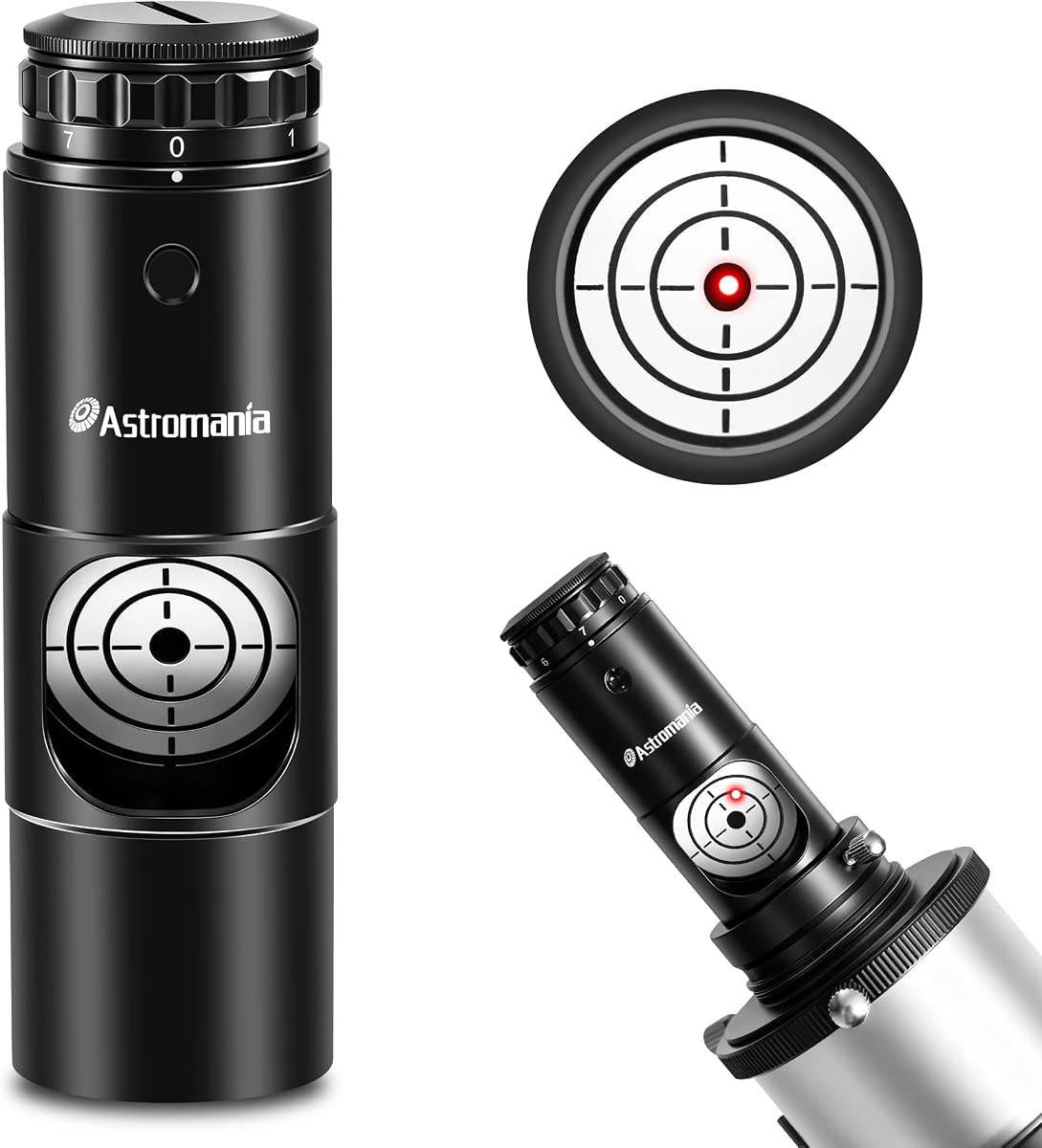
Astromania Laser Collimator 1.25"
4.5Editor score
Seven brightness levels
Metal construction body
Includes CR2032 battery
Compact and portable
Achieving precise optical alignment is critical for anyone seeking the sharpest views through their Newtonian or reflector telescope. A quality laser collimator for telescope alignment ensures that your primary and secondary mirrors are perfectly centered, maximizing resolution and contrast across the entire field of view.
We evaluated ten leading models based on build quality, ease of use, brightness adjustment, and calibration stability. Our analysis covers budget-friendly options for beginners as well as premium tools for serious astrophotographers who demand pixel-level accuracy during imaging sessions.
Each pick highlights key strengths and potential trade-offs so you can choose the right tool for your specific setup. Remember that product availability and pricing change frequently, so always check current listings before making your final purchase decision today.
4.5Editor score
4.7Editor score

5.0Editor score
As an Amazon Associate we earn from qualifying purchases.
The following table provides a side-by-side comparison of all ten laser collimator models evaluated in this guide to help you quickly identify the best fit for your telescope.


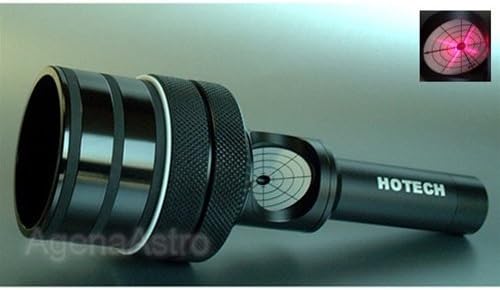
The HoTech SCA Laser Collimator stands out as the Editor's Choice for its innovative self-centering adapter technology that solves the universal slop problem found in most other collimators on the market today.
We may earn a commission when you buy through this link, at no additional cost to you.
Its patented mechanism ensures the laser sits perfectly centered in the focuser every time, providing repeatable and precise alignment results that are essential for high-resolution visual observing and astrophotography sessions.
While it carries a higher price tag than budget options, the investment pays off through consistent accuracy and durability that saves users from constantly recalibrating their tools after each setup or adjustment.
This collimator is ideal for serious astronomers and astrophotographers who demand the highest level of optical precision and want a tool that will maintain calibration over years of regular use in various conditions.
The self-centering adapter eliminates the gap issues common in other collimators by locking the device in place without needing thumbscrews or compression rings that can shift during use.
It works seamlessly with both 1.25 and 2 inch focusers across different telescope brands, making it a universal solution for those who own multiple reflector or Newtonian telescopes.
We may earn a commission when you buy through this link, at no additional cost to you.
The Astromania Laser Collimator delivers exceptional value as the Best Budget option, offering all the essential features needed for precise telescope alignment without breaking the bank for new observers.
We may earn a commission when you buy through this link, at no additional cost to you.
Its metal construction ensures durability while the included CR2032 battery means you can start using it immediately without needing to purchase additional accessories before your first alignment session.
While it only fits 1.25 inch focusers, this limitation is acceptable for most entry-level and intermediate telescopes that do not require the larger 2 inch connection for their optical train.
Beginners and casual observers will find this tool perfect for learning collimation basics while enjoying clear views that are significantly sharper than what misaligned optics can ever provide.
Since it includes the battery right out of the box, you can head out to your dark sky site or backyard without worrying about forgetting to grab the power source first.
Despite the low price, the anodized aluminum body resists wear and tear effectively, ensuring this tool lasts through many observing seasons and travels without failing during critical use.
We may earn a commission when you buy through this link, at no additional cost to you.
The Ocal Pro V4.0 Electronic Collimator represents the pinnacle of alignment technology as the Best Premium choice, combining electronic guidance with smartphone compatibility for unprecedented accuracy in the field.
We may earn a commission when you buy through this link, at no additional cost to you.
Its built-in calibration circles guide you to pixel-level accuracy, making it especially valuable for astrophotographers who need perfect alignment to avoid star trailing or uneven illumination in their images.
Although it comes with a much higher price tag, the advanced features justify the cost for those who prioritize imaging quality and want a tool that removes human error from the alignment process.
This electronic solution is perfect for professionals and serious amateurs who already use smartphones for astronomy planning and want a seamless workflow that includes precise optical alignment as part of that system.
By connecting to your smartphone, you leverage modern processing power to visualize alignment data clearly on a screen that is easier to read than small markings on traditional collimators.
The factory-centered calibration circles ensure you start with optimal baseline accuracy, reducing the time spent guessing adjustments and increasing confidence that your optical axis is truly perfect.
We may earn a commission when you buy through this link, at no additional cost to you.
This Astromania model offers solid versatility with its removable 2 inch adapter, allowing users to transition between 1.25 and 2 inch focusers without needing to purchase a second collimator separately for their telescope upgrade.
We may earn a commission when you buy through this link, at no additional cost to you.
The adjustable brightness levels let you adapt the laser intensity to different ambient light conditions, ensuring you can align your scope whether under a dark sky or during daylight testing sessions.
While the instructions are provided in both English and German, some users might find the bilingual packaging slightly confusing, though the core functionality remains straightforward and intuitive for most users.
Ideal for telescope owners who plan to upgrade their eyepieces to 2 inch sizes in the future, this collimator grows with your setup and maintains consistent performance across different focal configurations.
The removable 2 inch adapter means you won't need to buy another collimator if you switch to 2 inch eyepieces, saving money and maintaining consistency in your alignment workflow over time.
With seven brightness settings, you can dial down the intensity for dark environments to avoid eye strain or crank it up for daylight testing when ambient light might wash out the beam.
We may earn a commission when you buy through this link, at no additional cost to you.
SVBONY delivers a reliable mid-range option that balances price and performance, featuring a removable 2 inch adapter and triple cemented lens for stable beam projection during your telescope alignment tasks.
We may earn a commission when you buy through this link, at no additional cost to you.
The inclusion of a full set of step-by-step instructions makes it accessible for beginners who may be new to the mechanics of collimating a Newtonian reflector telescope for the first time.
While it shares many similarities with other models in this price tier, the solid metal body ensures it can withstand the rigors of transport to remote dark sky sites without losing calibration over time.
Users looking for a dependable tool that offers good value without sacrificing essential features will find this SVBONY model a satisfying choice for both visual observing and basic imaging alignment needs.
The triple cemented lens design minimizes internal reflection issues, ensuring the red dot remains stable and clear even when you tilt the collimator at different angles during adjustment.
Clear instructions reduce the learning curve significantly, allowing newcomers to gain confidence quickly as they learn to align their optics without needing to watch external tutorials or forums.
We may earn a commission when you buy through this link, at no additional cost to you.
This SVBONY bundle combines a user-adjustable laser collimator with a high-quality eyepiece, offering extra value for those who want both alignment tools and improved viewing optics in a single purchase.
We may earn a commission when you buy through this link, at no additional cost to you.
The 62-degree apparent field of view in the eyepiece provides a wide perspective that enhances the experience of lunar and deep-sky observing after you have perfectly aligned your telescope optics.
While the bundle is primarily focused on visual astronomy, the collimator included features adjustable brightness and standard 1.25 fitting, making it versatile enough for a wide range of Newtonian reflector setups.
Ideal for observers who want to upgrade their eyepieces while also ensuring their alignment is accurate, this package saves time and effort by addressing both viewing and mechanical performance simultaneously.
The eyepiece provides an ultrawide field that makes locating targets easier and observing more immersive, complementing the precision alignment you achieve with the included laser collimator tool.
Buying the collimator and eyepiece together can be more cost-effective than purchasing them separately, especially for beginners building their first complete observing kit with quality components.
We may earn a commission when you buy through this link, at no additional cost to you.
The Alstar Laser Collimator is designed for portability, featuring a compact body that fits easily into any observing kit without adding significant bulk to your carry setup for dark sky sessions.
We may earn a commission when you buy through this link, at no additional cost to you.
Its side window allows you to monitor the laser reflection directly, which simplifies the alignment process by letting you see if the beam is centered without needing a separate reflection tool.
While the battery is not included in the package, the design makes battery exchange simple via the rear screw cap, ensuring you can keep the tool operational when it runs low on power quickly.
Best for travelers and those with limited storage space, this collimator balances convenience with functionality, delivering accurate alignment results for 1.25 inch telescopes in a lightweight form factor.
The 45-degree side window lets you view the reflection path directly, which reduces the need for guesswork and helps you confirm that the laser returns perfectly to its source point.
Its lightweight construction makes it easy for one person to handle and adjust the telescope alone, streamlining the collimation process when working without assistance in the field.
We may earn a commission when you buy through this link, at no additional cost to you.
This Alstar model provides universal compatibility with both 1.25 and 2 inch focusers, making it a solid choice for users who own multiple telescopes or plan to upgrade their optical train later.
We may earn a commission when you buy through this link, at no additional cost to you.
The triple cemented lens ensures a stable and accurate beam projection, which is critical for achieving the precise alignment needed to unlock your telescope's full visual and imaging performance capabilities.
While some users report a slightly lower rating compared to premium options, the tool still delivers reliable results for the price, especially when the sealed adjustment ports are left untouched during normal use.
Ideal for those seeking a balanced combination of versatility and performance, this collimator offers enough features to satisfy both casual observers and more dedicated astronomers on a budget.
Having the 2 inch adapter included means you can use this tool across different telescopes without worrying about compatibility issues, reducing the need for multiple alignment tools in your kit.
The sealed adjustment ports protect internal mechanisms from dust and accidental shifts, ensuring the collimator stays calibrated longer even when stored in a dusty observatory or travel case.
We may earn a commission when you buy through this link, at no additional cost to you.
This SVBONY bundle includes a cell phone adapter that supports eyepiece diameters from 25 to 48mm, opening the door for mobile astrophotography after you have aligned your telescope with the included laser collimator.
We may earn a commission when you buy through this link, at no additional cost to you.
The adapter features a steel bolt locking mechanism instead of a spring, providing more secure clamping that reduces vibration and keeps your smartphone steady during longer exposure sessions.
Although it does not fit 2 inch eyepieces, the compatibility with most major phone brands makes it a versatile tool for capturing moon and planetary images using devices you already own in your pocket.
Perfect for beginners in mobile astronomy, this package combines essential alignment tools with the ability to photograph celestial targets, streamlining your workflow from setup to image capture seamlessly.
By including the phone adapter, the bundle encourages you to document your observing results immediately, turning simple visual sessions into shareable astrophotography experiences without extra purchases.
The high-density EVA pads and steel bolt ensure your phone stays protected and stable, reducing the risk of damage or blur that often comes with less secure mounting solutions in the market.
We may earn a commission when you buy through this link, at no additional cost to you.
The SVBONY SV197 bundle pairs a laser collimator with a Cheshire eyepiece, giving you two different alignment methods to verify your setup and ensure consistent accuracy for Newtonian and reflector telescopes.
We may earn a commission when you buy through this link, at no additional cost to you.
The Cheshire eyepiece requires no batteries and works by reflecting light off a bright mirror with sighting holes, making it an excellent backup for daytime alignment when ambient light is sufficient.
Both tools are precision machined from aluminum with fine crosshairs, ensuring durable performance over years of use and allowing you to confirm alignment using complementary techniques for greater confidence.
Ideal for astronomers who value redundancy and accuracy, this dual-tool bundle covers all bases for collimation, whether you prefer the speed of a laser or the traditional reliability of a Cheshire eyepiece.
Using both laser and Cheshire methods lets you cross-check your alignment, reducing the chance of error and ensuring that your optical axis is truly centered for optimal visual and imaging results.
The Cheshire eyepiece provides a reliable backup that never needs power, which is useful during travel or when the laser runs out of battery in the field without needing to swap cells.
We may earn a commission when you buy through this link, at no additional cost to you.
Selecting the right laser collimator involves evaluating several key factors that directly impact alignment precision and long-term usability for your specific telescope setup.
Ensure the collimator matches your telescope's focuser diameter. Most Newtonians use 1.25 inch focusers, but many advanced setups upgrade to 2 inch. Models with removable adapters offer flexibility if you plan to upgrade your eyepieces later.
Always check the product specs to confirm it supports your current focuser size or includes an adapter to avoid compatibility issues that prevent proper insertion and alignment.
A laser with adjustable brightness levels helps you adapt to different ambient light conditions. Seven brightness levels are common and allow you to dial down intensity for dark skies or increase it for daylight testing.
This feature ensures the beam remains visible without causing eye strain, which is essential when you need to make fine adjustments during extended collimation sessions in varying environments.
Metal construction, especially anodized aluminum, provides durability and stability. It resists wear and tear during transport and helps maintain calibration better than plastic alternatives.
Look for solid body materials that feel weighty and robust, as this typically indicates better internal alignment and longer service life for your alignment tool.
Check which battery type the collimator uses and whether it is included. CR2032 lithium batteries are common, but some high-end models may use CR123A which are harder to find on short notice.
Having the battery included saves you immediate extra cost and ensures you can use the tool right out of the box, but verify availability for replacements when the original runs out.
A reliable collimator should maintain its calibration over time. Sealed adjustment ports and precision engineering help prevent internal shifts due to dust or accidental bumps during transport.
Prioritize models with proven stability and reviews confirming consistent performance, as a drifting collimator will lead to misaligned optics even if the adjustment process seems correct.
Features like side windows for beam monitoring or bundled accessories such as eyepieces and phone adapters add value. These can streamline your workflow and enable additional capabilities like astrophotography.
Evaluate whether these extras align with your goals. A phone adapter is useful if you plan to shoot through your scope, but may be unnecessary if you focus purely on visual observing.
User-friendly designs with clear instructions reduce the learning curve. Look for intuitive layouts where adjustment screws and battery compartments are accessible without tools.
A simple setup process encourages regular collimation checks, which is vital for maintaining peak telescope performance and getting the clearest views possible from your optical system.
Consider your budget against your needs. Budget models work well for casual observers, while premium options offer electronic guidance or self-centering adapters for astrophotographers demanding pixel-level accuracy.
Invest more only if you require higher precision or specific features. For most visual observers, a reliable mid-range collimator delivers excellent results without overspending on unnecessary technology.
Begin by inserting the collimator into your telescope's focuser. Ensure it fits snugly, and if using an adapter, secure it tightly to prevent wobbling. Turn on the laser and observe the beam on a wall to check initial calibration before inserting it into the scope.
Adjust the secondary mirror screws until the laser dot hits the center of the primary mirror mark. Then tilt the primary mirror until the reflection aligns back to the center of the laser collimator. This two-step process ensures both mirrors are centered along the optical axis.
Store the collimator in a padded case to prevent impacts that could knock its calibration out of alignment. Replace batteries if the beam dims, and periodically test the collimator against a known reference to ensure continued accuracy over time.
A laser collimator ensures your telescope's mirrors are precisely aligned, which maximizes resolution and contrast. Without proper collimation, your views will appear soft or distorted even with expensive eyepieces. It simplifies the alignment process significantly compared to traditional methods.
You should collimate your Newtonian reflector after each transport or if it experiences a bump. Frequent checking ensures consistent optical performance and prevents losing alignment during critical observing sessions when visibility is best.
Yes, you can use a laser collimator during daylight if you find a bright enough environment to see the beam. Some models offer adjustable brightness to help the laser remain visible even with ambient sunlight affecting visibility.
The difference lies in the focuser diameter they fit. A 2 inch collimator accommodates larger focusers used in advanced setups. Adapters allow some models to work with both sizes, providing flexibility for upgrades.
Yes, most laser collimators require batteries to power the laser beam. Check if the package includes them before purchasing. CR2032 batteries are common and widely available at most stores or online.
A Cheshire eyepiece is excellent for daytime alignment without power, but a laser offers speed and precision in the dark. Many users prefer using both together to verify alignment through multiple methods for accuracy.
Test it by pointing at a distant target and rotating the collimator. The beam should remain steady without moving. If it wobbles, you may need to recalibrate the adjustment screws or replace the unit.
Laser collimators are primarily designed for Newtonian reflectors. For Schmidt-Cassegrain telescopes, specialized collimation tools or methods are recommended to ensure the correct alignment of their complex optical systems.
We reviewed ten top laser collimator models ranging from budget-friendly options to premium electronic tools, each offering unique advantages for different observers and telescope setups.
Prioritize features like focuser compatibility, build quality, and brightness adjustment based on your specific observing habits and upgrade plans to ensure long-term satisfaction with your alignment tool.
Check current availability and listings before buying since product details and stock change frequently to ensure you get the exact model you expect for your telescope needs.