
FotoZ Macro Conversion Lens 37-72mm
4.6Editor score
Universal 37 to 72mm
Tool free snap on design
Three element optical system
This guide compares the top 10 macro lens for insect photography options, evaluating optical quality, magnification, and compatibility to help you capture
Macro photography offers a unique window into the miniature world, allowing us to see intricate details of insects and flowers often missed by the naked eye. Choosing the right lens is crucial for capturing sharp, vibrant images that reveal the hidden beauty of small subjects without disturbing them.
To compile this list, we analyzed ten diverse macro lens options ranging from smartphone attachments to professional interchangeable lenses. Each product was evaluated based on magnification power, optical clarity, build quality, and ease of use for insect photography enthusiasts at every level.
Each pick below highlights specific strengths and ideal use cases, helping you match the gear to your camera system and budget. Note that product availability and pricing can change frequently, so always verify current details before making your final purchasing decision today.
4.6Editor score

4.7Editor score
4.6Editor score
This side-by-side comparison highlights the key specifications and capabilities of all ten selected macro lenses to help you quickly identify the best fit for your specific camera system and photography needs.


The Canon RF100mm F2.8 L Macro IS USM Lens stands out as a premier choice for serious insect photographers seeking maximum detail and flexibility. With a world first maximum magnification of 1.4x, it allows you to capture minute textures on insect wings and bodies that standard macro lenses miss entirely.
We may earn a commission when you buy through this link, at no additional cost to you.
Its hybrid image stabilizer compensates for both angular and shift camera shake, which is critical when shooting handheld at such high magnifications. The optical image stabilizer provides up to five stops of correction, enabling sharper images in lower light without needing a tripod. The spherical aberration control ring lets you adjust the character of your bokeh for creative background separation.
While the price is higher than entry level options, the investment pays off in image quality and versatility. The lens is optimized for Canon RF mount cameras, ensuring seamless communication and autofocus performance. It delivers bright, sharp results even wide maximum aperture, making it reliable for challenging lighting conditions in the field.
This lens is ideal for professionals and enthusiasts who demand the best possible resolution and depth of field control. If you shoot with Canon EOS R series cameras and want to push the boundaries of close up photography, this is the definitive tool for stunning insect portraits that reveal every hair and facet.
The 1.4x magnification allows you to fill the frame with tiny subjects, revealing details like compound eyes and wing veins with breathtaking clarity.
Advanced stabilization technology counters micro movements, letting you shoot sharp macro images handheld even at slower shutter speeds.
We may earn a commission when you buy through this link, at no additional cost to you.
The TTARTISAN 40mm f/2.8 Macro Lens offers exceptional value for Sony E mount users who prioritize sharpness and build quality without breaking the bank. Designed for APS-C sensors, it provides a versatile focal length that works well for insects, portraits, and still life photography with precise manual control.
We may earn a commission when you buy through this link, at no additional cost to you.
Its optical construction includes seven groups and eight elements with dual LD glass to minimize aberrations and deliver crisp clarity across the frame. The eleven blade aperture design creates creamy background blur that helps isolate subjects like butterflies or bees from busy natural backgrounds effectively.
Weighing just thirteen point one ounces, this lens is significantly lighter than many competitors, making it easy to carry on long nature hikes. The all metal construction ensures durability against bumps and drops, giving you confidence when shooting in rugged outdoor environments.
This lens is perfect for hobbyists and enthusiasts comfortable with manual focusing who want professional results at a fraction of the cost. While it lacks autofocus, the tactile focus ring allows for precise adjustments, making it a rewarding tool for deliberate and careful macro work.
The sturdy all metal housing protects internal optics and provides a comfortable grip, ensuring longevity even with frequent field use.
An eleven blade aperture circle produces smooth out of focus highlights that enhance the artistic appeal of your insect portraits.
We may earn a commission when you buy through this link, at no additional cost to you.
The ULANZI CL-003 Phone Macro Lens brings serious magnification power to your smartphone, allowing you to capture intricate insect details with ease. Featuring ten times optical magnification and a precise optical design, it transforms your phone camera into a capable close-up tool for nature photography enthusiasts.
We may earn a commission when you buy through this link, at no additional cost to you.
Its tele focusing operation mimics professional DSLR methods, giving you control over the shooting distance to maintain subject comfort. The upgraded lens combination improves light throughput and reduces distortion, ensuring clear and vivid images of flowers and small creatures without unwanted artifacts.
The lens features a master style aluminum alloy body with non slip texture for a secure grip during use. It works with the included cold shoe clip or any phone case with a 17mm screw port, offering flexible installation options for different setups and scenarios.
This lens is ideal for mobile photographers who want high quality macro results without carrying heavy camera gear. While it requires an adapter for some phones, the optical performance and build quality make it a standout choice for capturing stunning close-ups on the go.
Adjustable focusing range lets you maintain distance from skittish subjects while still achieving sharp, detailed close-up shots.
Aluminum alloy construction ensures durability and a premium feel, matching the aesthetic of pro camera accessories.
We may earn a commission when you buy through this link, at no additional cost to you.
The FotoZ Macro Conversion Lens transforms your existing camera lens into a capable macro setup for capturing fine details of insects and jewelry. With a versatile thread range from thirty seven to seventy two millimeters, it fits most DSLR and mirrorless lenses without needing expensive dedicated macro replacements.
We may earn a commission when you buy through this link, at no additional cost to you.
Its three element three group optical design features multi coated glass to control distortion and improve light transmission. This ensures clearer close up details while maintaining reasonable image quality across the frame for your macro photography needs.
The spring loaded adapter attaches securely to filter rings without tools, allowing quick switching between macro and normal photography modes. This convenience saves time in the field and keeps your original lens setup intact for standard shots when needed.
This lens is the perfect starting point for photographers exploring macro work on a budget. While it lacks the precision of dedicated macro lenses, its universal fit and easy use make it an excellent tool for capturing detailed close-ups of nature and small objects.
Adapter rings cover most common thread sizes, ensuring compatibility with a wide variety of camera lenses out of the box.
Tool free design lets you add or remove the macro lens in seconds, keeping your workflow smooth during active shooting sessions.
We may earn a commission when you buy through this link, at no additional cost to you.
The Canon RF35mm F1.8 is Macro STM Lens is a compact, versatile option for RF mount users who want macro capabilities without dedicating a full telephoto lens. Its wide aperture and quick autofocus make it suitable for everyday close-ups of flowers, insects, and product shots in varied light.
We may earn a commission when you buy through this link, at no additional cost to you.
With a minimum focusing distance of just point five six feet, you can get close enough to reveal texture and detail on small subjects. Optical image stabilization provides up to five stops of shake correction, helping you maintain sharpness even in lower light conditions.
The control ring allows direct setting changes without digging into menus, speeding up your workflow while shooting. This feature is particularly useful when capturing moving insects where quick adjustments to exposure settings can mean the difference between a missed shot and a perfect frame.
While it offers half life-size magnification, it is ideal for casual macro work and general photography. If you shoot with an EOS R camera and want one lens that handles both wide shots and close-ups efficiently, this lens delivers strong performance and convenience.
F1.8 max aperture lets you shoot in dim light and achieve shallow depth of field for pleasing background separation.
Customizable control ring gives you instant access to aperture or ISO adjustments without breaking your focus on the subject.
We may earn a commission when you buy through this link, at no additional cost to you.
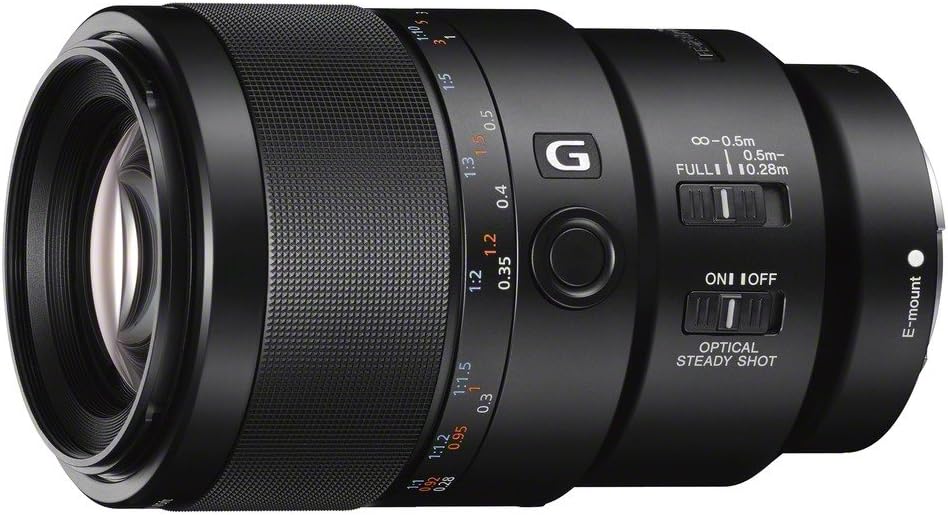
The Sony FE 90mm F2.8 Macro G OSS Lens is a top-tier choice for full-frame shooters who demand clinical sharpness and rugged durability. Its Nano AR coating effectively suppresses reflections, while Super ED glass reduces flare and ghosting for pristine images of complex subjects like insect eyes and wings.
We may earn a commission when you buy through this link, at no additional cost to you.
The direct drive SSM motor provides quiet and precise focusing, essential when working with wildlife that may react to noise. Optical Steady Shot image stabilization ensures sharp handheld results, giving you confidence when shooting without a tripod in natural environments.
Its dust and moisture resistant design protects internal elements from harsh conditions, allowing you to shoot in light rain or dusty terrain. The nine-blade circular aperture contributes to gorgeous bokeh that beautifully separates subjects from busy backgrounds.
This lens is built for professionals who need reliability and unmatched image quality. While it comes at a premium price, the combination of weather sealing, stabilization, and resolution makes it a worthwhile investment for serious macro photography work.
Advanced coating minimizes internal reflections, ensuring high contrast and color accuracy even in challenging lighting.
Sealed construction protects against moisture and dust, extending the lens life in tough outdoor shooting conditions.
We may earn a commission when you buy through this link, at no additional cost to you.
The 67mm Close-up Filter Kit provides four different diopter strengths, giving you versatile magnification options for close-up photography without buying multiple lenses. You can use them individually or stack them to create additional powers, adapting quickly to various subject sizes and distances.
We may earn a commission when you buy through this link, at no additional cost to you.
Each close-up lens maintains resolution and picture clarity while magnifying image size, letting you capture details of flowers, coins, and insects easily. Double threading allows you to attach other filters like polarizers on top, increasing creative control over reflections and light.
The kit includes a nylon filter pouch, lens cap, and cleaning cloth for organized storage and protection. A one year warranty and lifetime after-sales service provide peace of mind for this affordable accessory set.
This kit is ideal for photographers who already own lenses with a 67mm thread and want an easy way to experiment with macro work. While optical quality is not match to dedicated macro lenses, it offers significant flexibility and convenience at a low cost.
Combining filters creates custom magnification powers, letting you tailor the lens strength to specific small subjects.
Included case and cleaning cloth keep your filters organized and free of dust, maintaining optical quality over time.
We may earn a commission when you buy through this link, at no additional cost to you.
The APEXEL 100Ultra Macro Lens is a top choice for iPhone users aiming to photograph insects and plants with stunning clarity and magnification. Its lossless magnification technology preserves detail while offering ten times zoom, capturing intricate natural textures that standard phone cameras cannot resolve.
We may earn a commission when you buy through this link, at no additional cost to you.
An ultra-large F1.05 aperture enhances low-light performance and provides beautiful bokeh and depth of field for professional-quality images. The multi-lens combination boosts light transmittance to ninety-nine point five percent per lens, minimizing reflections and flare for brighter sharper results.
Designed as a universal clip-on lens, it fits a wide range of smartphones including iPhone and Samsung Galaxy models. No tools or complicated setup are required; simply clip it onto your phone's camera to instantly upgrade your mobile photography capability.
This lens is perfect for social media creators and mobile photographers who want high-quality macro results on the go. While stability depends on the clip, the optical performance and magnification power make it a compelling option for detailed insect and flower close-ups.
Advanced technology maintains image clarity at high magnification, preventing the digital blur common with standard phone zoom.
F1.05 aperture gathers more light, allowing you to shoot macro in shaded areas without raising ISO too high.
We may earn a commission when you buy through this link, at no additional cost to you.
The Xenvo Pro Lens Kit includes a fifteen times macro lens and a wide angle lens, offering a complete solution for smartphone photographers exploring close-up work. The TruGrip lens clip provides superior gripping power, keeping the lens secure while you frame your next perfect shot.
We may earn a commission when you buy through this link, at no additional cost to you.
The GlowClip rechargeable LED light clips anywhere on your phone to illuminate subjects with warm, continuous light. Its three brightness settings help avoid the blinding flash effect typical of built-in phone lights, resulting in more natural and flattering photos.
Crafted from aircraft-grade aluminum and premium optical glass, the lenses minimize ghosting and reflections for better clarity. The included DuraCase and quick-release lanyard make transport and protection easy, ensuring your kit stays safe on your next outing.
This kit is ideal for beginners who want to experiment with macro photography without investing in expensive gear. While image quality may not match dedicated lenses, the included lighting and versatility make it a great tool for casual and hobbyist macro shots.
Rechargeable LED provides warm, natural illumination, improving clarity and reducing shadows in low-light macro shots.
TruGrip clip holds lenses firmly in place, preventing slips that could ruin your composition or damage equipment.
We may earn a commission when you buy through this link, at no additional cost to you.
The AstrHori 25mm F2.8 Ultra Macro Lens excels in a dedicated two to five times magnification range, capturing imagery that surpasses life-size proportions for extreme detail. Designed for full-frame Sony E-mount cameras, it offers a unique wide-angle configuration optimized specifically for high-magnification macro photography.
We may earn a commission when you buy through this link, at no additional cost to you.
Its manual focus operation allows precise control over focusing distance, which is beneficial when working with close-up subjects that require exact adjustments. The wide-angle design provides greater depth of field compared to telephoto macro lenses, keeping more of the subject in sharp focus.
The slim and lightweight physical design facilitates handheld use with ease, providing ample space for effectively illuminating close-up subjects. The ergonomic build enhances maneuverability, making it comfortable to use during extended shooting sessions in the field.
This lens is ideal for photographers seeking extreme magnification without needing extension tubes or bellows. While it does not support infinity focus and relies on manual control, its specialized design makes it a powerful tool for detailed super macro work on Sony cameras.
The two to five times magnification range reveals microscopic details, perfect for studying tiny textures and structures.
Wide-angle configuration optimizes focus depth at high magnification, reducing focus stacking needs for sharp results.
We may earn a commission when you buy through this link, at no additional cost to you.
Selecting the right macro lens requires understanding magnification ratios, focal lengths, compatibility, and build quality to match your specific needs and camera system.
Magnification ratio determines how large your subject appears on the sensor. For insect photography, a 1:1 ratio means life-size projection. Some lenses offer higher magnifications like 1.4x or 5x for extreme detail. Higher ratios allow you to capture minute textures but often reduce working distance.
Look for at least 1:1 magnification for true macro capabilities. If you need to see extreme microscopic details, consider lenses with higher ratios or supplementary filters to extend your reach.
Focal length affects working distance and perspective. Telephoto macro lenses around 90mm to 100mm let you shoot from farther away, avoiding disturbing skittish insects. Wide-angle macros allow close proximity but reduce background separation and working room.
Choose 90mm to 100mm for insects to maintain comfort and subject safety. Shorter focal lengths are better for static subjects or indoor macro photography where proximity is less critical.
Larger maximum apertures like f/2.8 provide better low-light performance and shallow depth of field for artistic backgrounds. However, macro shooting often requires stopping down to f/8 or f/11 for sufficient sharpness across the subject.
Select a lens with a bright aperture for flexibility in dim light. Ensure the lens maintains optical quality when stopped down, as this is typical for macro work.
Image stabilization is crucial for handheld macro photography where even slight movements blur images. Optical stabilization compensates for camera shake, enabling sharper shots at slower shutter speeds without a tripod.
Prioritize lenses with effective stabilization systems. This feature significantly improves your success rate when shooting handheld in natural environments.
Ensure the lens mount matches your camera system. Full-frame lenses work on APS-C bodies but may suffer crop issues. Dedicated lens mounts guarantee full communication for autofocus and exposure.
Verify mount compatibility before buying. If you switch camera brands, consider lenses with adapter support to maintain flexibility for future upgrades.
Outdoor insect photography exposes gear to moisture, dust, and bumps. Weather-resistant construction protects internal components and ensures durability over time. Metal bodies generally offer better longevity than plastic alternatives.
Look for dust and moisture resistance if shooting outdoors frequently. A solid build quality ensures your investment lasts through years of field use.
Autofocus provides speed for moving subjects, but manual focus allows precise control over depth of field. Some high-quality macro lenses offer both modes with focus ring override for maximum flexibility.
Decide based on your workflow. Hybrid systems offer the best balance, letting you rely on autofocus for framing and switch to manual for exact focus adjustments.
Macro lenses range from affordable attachments to premium professional optics. Entry options include clip-ons and close-up filters, while dedicated lenses offer superior optical quality. Determine your needs before spending excessively.
Start with entry options if you are new to macro photography. As you progress, consider investing in dedicated lenses for better resolution and reliability.
To use your macro lens effectively, start by positioning your camera so the subject fills the frame. Maintain a comfortable distance using the minimum focusing distance to avoid shadowing your subject. For moving insects, use continuous autofocus and rapid shutter speeds to freeze motion.
Care for your lens by storing it in a dry, cool place inside a padded case. Clean glass surfaces gently with a microfiber cloth to avoid scratches. Avoid exposing the lens to extreme temperatures or direct sunlight for extended periods to protect internal coatings and adhesives.
Regularly check the filter threads and focus ring for debris. If you use adapters, ensure they are tightly secured to prevent light leaks or misalignment. Proper maintenance keeps your macro lens in optimal condition for sharp, consistent close-up photography.
For insect photography, a 1:1 magnification ratio is considered standard and provides life-size detail on the sensor. If you wish to capture minute structures like insect eyes or wing veins, consider lenses with higher magnifications such as 1.4x or 2x to extend your close-up capabilities.
Yes, close-up filters allow you to convert existing lenses into macro setups affordably. They screw onto the front of your lens and provide additional magnification. While convenient and flexible, they may offer lower optical quality compared to dedicated macro optics designed for close focusing.
Disturbance depends on both distance and lens focal length. Telephoto macro lenses like 90mm or 100mm let you shoot from farther away, reducing the chance of scaring sensitive subjects. Shorter focal lengths require you to be closer, which may frighten insects away.
A tripod helps stabilize your camera and ensures sharp images, especially in low light or when using slow shutter speeds. However, modern image stabilization and fast autofocus systems allow many photographers to shoot handheld effectively with proper technique and support.
Use narrow apertures like f/8 to f/16 to increase depth of field. Shoot with fast shutter speeds to freeze movement and use ISO settings that balance noise levels. Manual focus often provides better precision for still subjects than autofocus in macro scenarios.
Natural light is ideal, but diffusers or reflectors help soften harsh shadows. External flashes or LED lights can fill dark areas without disturbing subjects. Position lighting from the side to enhance texture and detail on small insects.
Macro lenses are designed for specific mounts like Canon RF, Sony E, or Nikon Z. Ensure compatibility with your camera body before purchasing. Many manufacturers offer lenses across multiple systems, but using adapters may impact autofocus speed or image quality.
Choosing the right macro lens for insect photography depends on balancing magnification, working distance, and budget. Our top picks offer diverse solutions, from the powerful Canon RF100mm for professionals to affordable smartphone attachments for casual enthusiasts looking to explore macro work.
Prioritize optical quality, stabilization, and weather resistance if you shoot outdoors frequently. Consider whether manual or autofocus suits your workflow. Each lens on this list delivers unique advantages tailored to specific needs and camera systems.
Prices and availability change regularly, so always verify current details before purchasing. With the right gear and technique, you can capture stunning close-ups that reveal the intricate beauty of the insect world with exceptional clarity.