
Intraoral Camera USB Dental Camera
4.0Editor score
13MP HD CMOS Imaging
Slim 6mm Mini Lens Tip
Dual Control Buttons Design
Intraoral cameras have revolutionized how dental professionals diagnose and communicate treatment plans. A high-quality device ensures crystal clear images that build patient trust and improve case acceptance rates significantly.
We evaluated ten leading models based on resolution, software integration, ergonomic design, and overall performance. Each product was analyzed for its ability to deliver consistent results in busy clinical environments.
Our selections highlight diverse options ranging from budget-friendly USB units to advanced wireless systems. Prices and availability change frequently so verify current details before purchasing your new imaging tool.
4.0Editor score

4.5Editor score

4.0Editor score
As an Amazon Associate we earn from qualifying purchases.
The following table provides a side-by-side comparison of all ten models reviewed in this guide to help you quickly identify key specifications and differences.


The DY-50 intraoral camera stands out for its exceptional clarity and broad software compatibility. With a rating of 4.5 stars it delivers sharp images that help dentists communicate effectively with patients.
We may earn a commission when you buy through this link, at no additional cost to you.
Its standout feature is the included capture button driver which ensures seamless integration with popular platforms like Eaglesoft and Dexis. The anti-fog lens maintains visibility even in moist environments.
While it requires your software to be on the supported list this limitation ensures stability. The USB connection is simple and requires no additional hardware for basic operation.
This model is ideal for clinics seeking a reliable plug-and-play solution. It balances performance and ease of use making it a top choice for daily clinical examinations.
The included driver allows the capture button to trigger images directly within your existing workflow without switching windows or applications.
Anti-fog coating on the lens ensures consistent image quality regardless of humidity levels during patient procedures.
We may earn a commission when you buy through this link, at no additional cost to you.
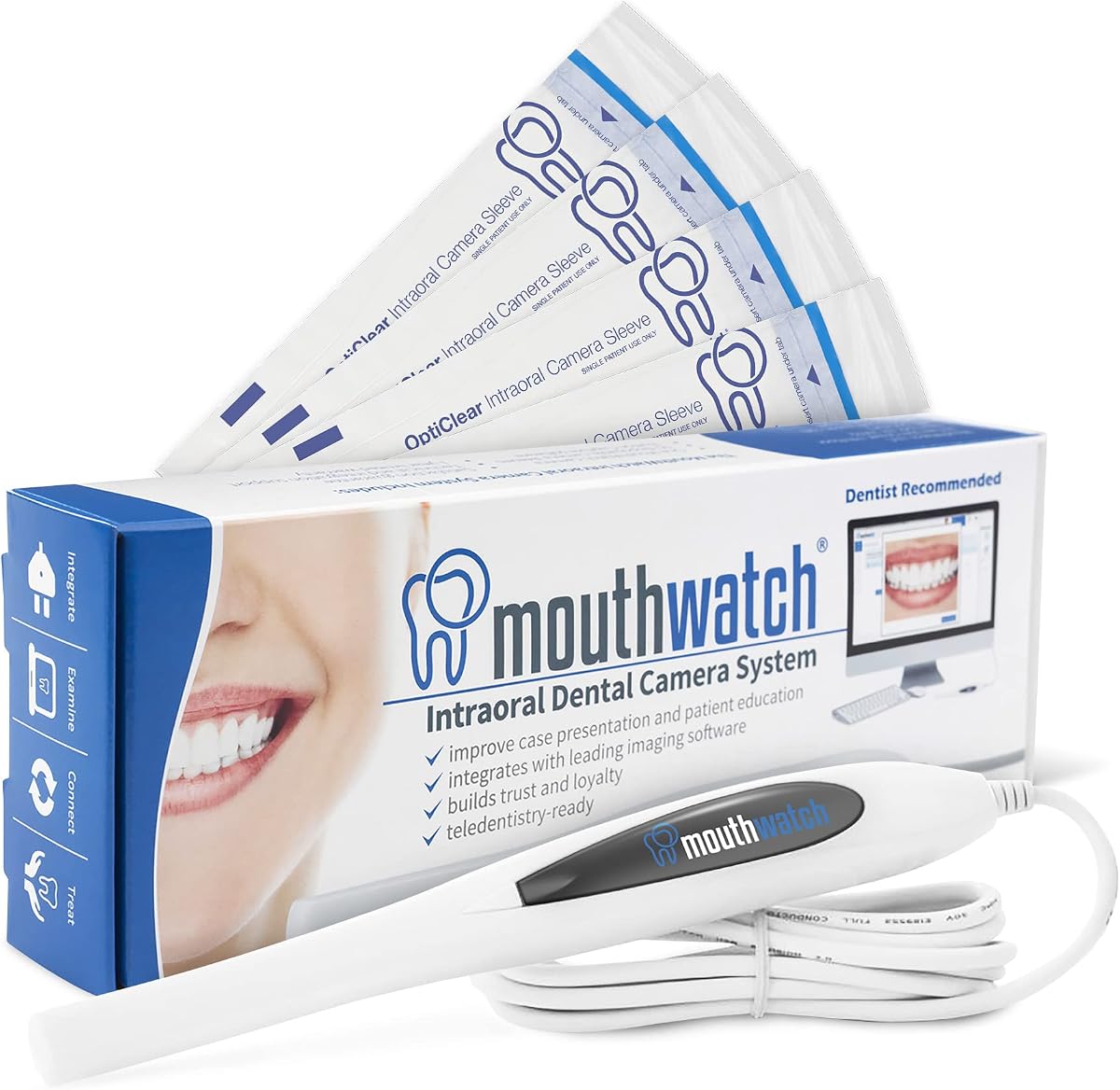
The MouthWatch camera is designed for speed and clarity in busy practices. Its 4.4-star rating reflects consistent performance in delivering sharp images without the lag associated with auto-focus systems.
We may earn a commission when you buy through this link, at no additional cost to you.
A key strength is the fixed focal distance of 4mm to 45mm which eliminates hunting time. This ensures immediate results when capturing details on molars or interproximal surfaces.
While the fixed focus is efficient it may limit flexibility for varied distances. However the proprietary software handles integration well with over 50 supported suites.
This device is perfect for high-volume clinics prioritizing speed and ease of use. The lightweight design reduces hand fatigue during long sessions.
The single button operation saves seconds per patient which adds up significantly over a full day of appointments.
Weighing only 31 grams the camera feels light in hand reducing strain during extended dental procedures.
We may earn a commission when you buy through this link, at no additional cost to you.
This USB dental camera offers exceptional value for clinics needing basic functionality without high costs. It features a slim 6mm lens that easily reaches tight spaces between teeth.
We may earn a commission when you buy through this link, at no additional cost to you.
The dual capture buttons on the handle allow flexible operation for both left and right-handed users. Power comes directly from the USB port requiring no extra adapters.
While it lacks advanced software features the image quality is sufficient for standard examinations. The magnetic holder automatically turns off lights to save energy.
This model is recommended for small clinics or educational use. It provides essential imaging capabilities at a fraction of the cost of premium systems.
The slim lens tip and lightweight handle make it comfortable to use during detailed inspections of the oral cavity.
The magnetic holder ensures lights turn off automatically when the camera is not in use extending device lifespan.
We may earn a commission when you buy through this link, at no additional cost to you.
The DARYOU DY-60 brings digital zoom capabilities to affordable intraoral imaging. With a 4.3 rating it is praised for its ability to magnify details without losing clarity.
We may earn a commission when you buy through this link, at no additional cost to you.
The 4X zoom is useful for highlighting small cracks or decay that might otherwise be missed. It comes with a driver to integrate capture buttons with common software.
The resolution is 720P which is lower than newer 13MP models but adequate for most routine needs. Compatibility is strong with major systems like Dexis and Carestream.
This camera suits practices needing magnification without the cost of expensive optics. It balances functionality and budget well for everyday dental imaging tasks.
The digital zoom allows clinicians to focus on specific areas of concern while maintaining a steady image for patient education.
Included drivers simplify setup ensuring the capture button works immediately with supported imaging platforms.
We may earn a commission when you buy through this link, at no additional cost to you.
This wireless camera offers unparalleled freedom of movement during examinations. Its 13MP sensor and smart autofocus ensure high-quality images without manual adjustments.
We may earn a commission when you buy through this link, at no additional cost to you.
The eight integrated LED lights provide uniform illumination to eliminate dark corners inside the mouth. The anti-fog coating keeps the lens clear in humid environments.
Reliance on battery power requires charging between uses but the wireless charging base simplifies this process. It is ideal for practices needing mobile diagnostic tools.
For clinics prioritizing flexibility this device removes cable clutter effectively. The high resolution supports detailed documentation for insurance or treatment planning.
Eliminating cables allows clinicians to move freely around the patient chair without worrying about tethered cords.
The array of eight LEDs ensures every angle is well-lit for accurate visual assessment during procedures.
We may earn a commission when you buy through this link, at no additional cost to you.
The ProDENT HD model ensures broad compatibility with Windows systems from 7 to 11. It features an auto-off function when placed in the holder to conserve energy.
We may earn a commission when you buy through this link, at no additional cost to you.
The dedicated capture app bridges the gap between hardware and software making integration straightforward for various platforms. Support is available via email and phone.
While it lacks advanced optical zoom the reliability of the connection is strong. The plug-and-play design minimizes setup time for new users.
This camera is a solid choice for offices already running on Windows infrastructure. It provides dependable performance for daily imaging needs.
Supporting a wide range of Windows versions ensures the camera works in most existing office environments without upgrades.
The automatic shutdown when docked helps maintain the device health and reduce power consumption between patients.
We may earn a commission when you buy through this link, at no additional cost to you.
This 13MP model offers excellent resolution paired with six high-brightness white LEDs for superior lighting. The dual-button design allows for flexible capture from different angles.
We may earn a commission when you buy through this link, at no additional cost to you.
The magnetic holder automatically turns off the lights when the camera is docked which saves energy. It is compatible with most dental software out of the box.
The sensor provides sharp images suitable for documentation and diagnostic purposes. Its plug-and-play nature requires no external power sources.
This camera is great for clinics needing bright clear visuals without complex setups. It balances image quality with usability effectively.
Six bright LEDs eliminate shadows ensuring every tooth surface is visible during the examination.
Dual buttons allow easy switching between hands which enhances comfort during long clinical sessions.
We may earn a commission when you buy through this link, at no additional cost to you.
This model includes built-in diagnostic software that helps analyze captured images for potential oral conditions. The ultra-thin probe design ensures comfort for patients.
We may earn a commission when you buy through this link, at no additional cost to you.
Anti-shake technology stabilizes the view allowing for clearer images even during hand movements. The 5mm to 50mm focus range covers most clinical needs.
Zero latency transmission ensures immediate feedback which is crucial for patient discussions. However it requires initial software installation on the workstation.
Clinics seeking diagnostic assistance will find this tool valuable. It combines imaging with analysis to support accurate treatment planning.
Built-in software can mark oral conditions automatically providing extra data for professional review.
The slim 5mm probe allows easier insertion making the exam less intrusive for sensitive patients.
We may earn a commission when you buy through this link, at no additional cost to you.
Designed for patient comfort this camera features a 4.8mm ultra-thin lens that requires less mouth opening. It delivers 13MP resolution with eight LEDs for bright images.
We may earn a commission when you buy through this link, at no additional cost to you.
Dual capture buttons allow for flexible operation regardless of which hand the dentist uses. The magnetic holder automatically turns off lights to save power.
It connects directly via USB 2.0 without needing complex settings. This simplicity makes it a practical choice for daily routine use.
This model is ideal for pediatric or general practices prioritizing comfort. It offers a balance of high quality imaging and user-friendly design.
The 4.8mm tip reduces pressure on the gums and makes exams more comfortable for sensitive patients.
Front and back buttons allow quick image capture without needing to reach for other tools.
We may earn a commission when you buy through this link, at no additional cost to you.
This endoscope is engineered for personal care and home monitoring. It features a 1920P resolution and a universal 3-in-1 connector for various devices.
We may earn a commission when you buy through this link, at no additional cost to you.
The IP67 water-resistant rating allows safe rinsing after use which is vital for oral hygiene tools. It supports Android and Windows systems but not iOS.
Six adjustable LEDs provide consistent lighting for detailed surface inspection. The shadow-free design helps identify issues during routine checks.
For home users this device offers a convenient way to monitor oral health. It bridges the gap between professional tools and personal care.
Compatible with smartphones this camera helps users track their oral hygiene progress from home.
The water-resistant design ensures the device can be cleaned thoroughly to prevent bacterial buildup.
We may earn a commission when you buy through this link, at no additional cost to you.
Selecting the right dental camera involves evaluating several technical and practical factors to ensure it meets your clinical needs.
Higher resolution sensors like 13MP provide clearer images that help detect small cavities or cracks. Look for cameras with sensors that offer at least 1920P or higher for detailed work.
Choose a resolution that matches your diagnostic requirements without unnecessarily increasing cost.
Ensure the camera works seamlessly with your existing practice management software. Many models come with drivers or capture buttons that integrate directly into platforms like Eaglesoft or Dexis.
Verify the software list before purchasing to avoid extra configuration steps later.
The thickness of the lens tip affects patient comfort. Ultra-thin lenses around 4mm or 6mm are easier to insert and cause less gagging for sensitive patients.
Select a slim lens to improve patient experience during long examinations.
LED lighting is critical for visibility inside the dark oral cavity. Cameras with multiple LEDs ensure even lighting and reduce shadows that could hide defects.
Look for models with at least six adjustable LEDs for consistent illumination.
USB connectivity is standard and easy to set up. Wireless options offer mobility but require battery management. Consider your workflow needs when choosing between wired or wireless.
Decide between mobility and stability based on your clinic layout.
Lightweight handles reduce hand fatigue during frequent use. Dual buttons allow for flexible operation for both left and right-handed dentists.
Prioritize a comfortable grip to maintain efficiency over time.
Auto-focus provides convenience but may lag during procedures. Fixed focus is often faster and more reliable for standard distances.
Choose fixed focus for speed or auto-focus for versatility depending on your needs.
Reliable customer support helps resolve integration issues quickly. Look for companies offering phone or email assistance for technical problems.
Ensure the vendor offers responsive support to minimize downtime.
Before each use ensure the camera probe is clean and dry. Place the lens gently in the patient's mouth avoiding contact with sensitive tissues.
Press the capture button to save images directly to your software. Review the image immediately to confirm clarity before removing the camera.
After every patient rinse the lens thoroughly and place it in the magnetic holder. This turns off the lights to save energy and prolong device life.
Most models are compatible with popular platforms like Eaglesoft and Dexis. However you should verify the supported list before buying to ensure seamless integration with your current system.
You should clean the probe after every patient use to maintain hygiene. Use mild soap and water to rinse the lens and dry it thoroughly before storage.
Wireless cameras offer more mobility during exams but require regular charging. Wired models are more reliable and do not need battery management which may suit busy clinics better.
13MP or higher is ideal for detailed diagnostics. This resolution allows you to see fine details like hairline cracks without losing image quality during magnification.
Some models like the 1920P Oral Endoscope are designed for personal use. Always check compatibility with your smartphone or computer before purchasing for home applications.
Check that the correct driver is installed for your software. If issues persist contact the manufacturer's support team for assistance with configuration.
We reviewed ten excellent models ranging from budget USB options to premium wireless systems. The MouthWatch and DY-50 offer strong performance for professional clinics.
Prioritize software compatibility and image resolution when making your decision. A camera that integrates well will save time and improve patient communication.
Prices and availability change frequently so verify current details before purchasing your new imaging tool to ensure you get the best value.