
Yamaha MGX12
5.0Editor score
Tactile faders included
USB HDMI interface
Built in DSP
This guide compares the top digital mixing consoles for live sound and studio use, evaluating sound quality, connectivity, and workflow features.
Digital mixing consoles have revolutionized how professionals handle audio in live events and recording studios. These devices offer unparalleled flexibility, precise control, and advanced processing capabilities that analog boards simply cannot match.
We have carefully evaluated ten leading models based on their input counts, preamp quality, connectivity options, and user interface design. Our analysis focuses on real-world performance and reliability for various production environments.
Each selection highlights specific strengths to help you find the right tool for your needs. Keep in mind that pricing and availability change frequently so verify details before purchasing any unit.
5.0Editor score

4.7Editor score

4.8Editor score
This table provides a side by side overview of key specifications for all ten models evaluated in this guide to help you compare them quickly.




The Behringer X32 stands out as a top choice for professionals needing robust digital mixing capabilities. It has earned a strong reputation for delivering clear audio and flexible routing in both live and studio settings.
We may earn a commission when you buy through this link, at no additional cost to you.
Its core strength lies in the 32 MIDAS designed mic preamps that provide audiophile quality sound across all inputs. The console offers 25 fully automated buses and motorized faders for precise scene management and DAW integration.
While the interface can seem complex at first, the LCD Scribble Strips and intuitive channel assignments make navigation manageable after a short adjustment period. The large build ensures it withstands demanding environments.
This console is ideal for touring bands, fixed installations, and recording studios that require extensive channel counts and professional grade effects. We recommend it for users who need maximum flexibility.
The MIDAS designed preamps ensure clean signal amplification with minimal noise even at high gain settings.
Motorized faders allow instant scene recall and remote control integration for seamless operation during shows.
We may earn a commission when you buy through this link, at no additional cost to you.
The Yamaha MGX12 offers an excellent entry point into digital mixing with a user friendly design that appeals to beginners. It combines essential features with modern connectivity options like USB HDMI for video capture.
We may earn a commission when you buy through this link, at no additional cost to you.
Its key strengths include tactile faders, a 4.3 inch touchscreen, and built in DSP for professional sound without external gear. The included software bundle adds value for content creators needing recording and editing tools.
Some users might find the channel count limiting for large productions but it suffices for smaller setups like podcasts or worship bands. The compact form factor makes it easy to transport.
This mixer is perfect for small venues and home studios that need reliable performance without complexity. We recommend it for users prioritizing ease of use and modern connectivity.
USB HDMI interface supports 4K video pass through making it ideal for streaming and content creation workflows.
Integrated DSP provides latency free monitoring and professional EQ without needing external rack units.
We may earn a commission when you buy through this link, at no additional cost to you.
The Allen & Heath Qu 5 delivers premium performance with its 96kHz XCVI FPGA processing ensuring exceptional audio quality and ultra low latency. This model is designed for demanding professional environments.
We may earn a commission when you buy through this link, at no additional cost to you.
Its standout features include up to 38 inputs, 12 configurable mixes, and a 7 inch capacitive touchscreen for intuitive control. The integrated recording and effects capabilities support multi-track recording directly via USB.
While the price is higher than many competitors the sound quality and flexibility justify the investment for serious producers. The learning curve is moderate but rewards users with deep customization options.
This mixer suits live sound engineers and studios needing high resolution audio and extensive routing. We recommend it for professionals prioritizing sound fidelity and workflow efficiency.
96kHz processing ensures pristine sound quality with minimal latency for critical listening and recording applications.
Remote apps for Windows macOS iOS and Android allow control from anywhere in the venue or studio.
We may earn a commission when you buy through this link, at no additional cost to you.
The Behringer WING is built for large scale productions requiring extensive channel counts and bus systems. It provides 48 inputs and 28 buses with top tier MIDAS PRO preamps for professional sound quality.
We may earn a commission when you buy through this link, at no additional cost to you.
Its key strengths include 24 motorized faders, a large main display with a capacitive touchscreen, and unique touch sensitive channel editing sections. The AES50 ports support remote I/O connectivity for flexible stage setups.
The complexity and price make it less suitable for small projects but ideal for touring or large installations. Users will appreciate the precision offered by the dedicated rotary controls and color TFT display.
This console is best for events with many inputs needing precise control and remote flexibility. We recommend it for professional sound engineers handling complex live environments.
AES50 ports with SuperMAC technology enable ultra low latency remote I/O for distributed setups.
Touch sensitive channel editing sections allow rapid adjustments to parameters without navigating menus.
We may earn a commission when you buy through this link, at no additional cost to you.
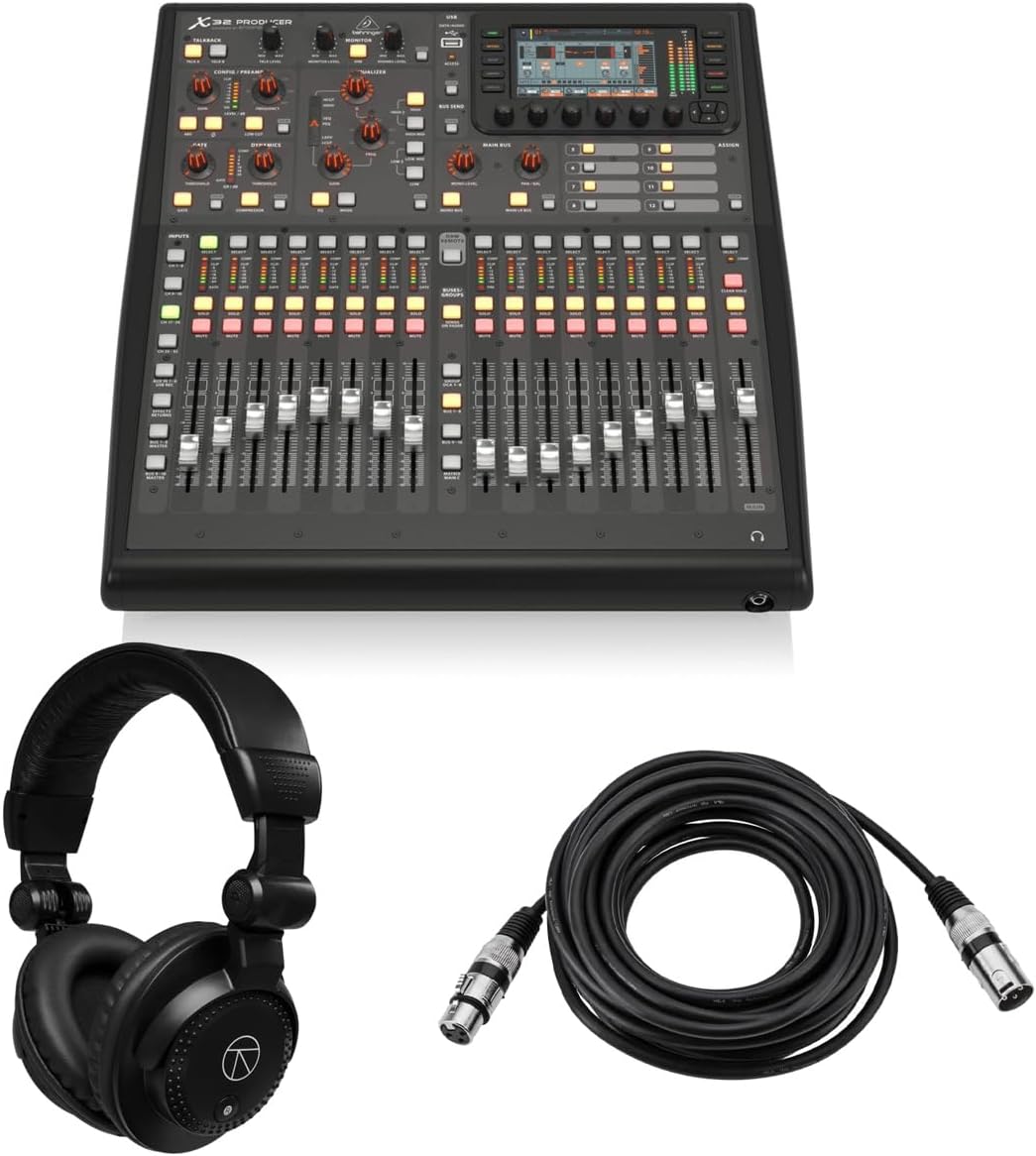
The Behringer X32 Producer offers the same core performance as the full X32 but in a rack mountable form factor with added value bundles. It is designed for both studio and live applications needing reliable sound.
We may earn a commission when you buy through this link, at no additional cost to you.
Its standout features include 16 programmable MIDAS preamps, 8 true stereo and 16 mono internal effects engines, and a high resolution 5 inch TFT display. The bundle includes essential accessories to get started quickly.
Users gain access to a robust 40 input 25 bus system without needing external gear. The virtual FX rack supports high end simulations for professional sound shaping and monitoring.
This unit is perfect for studios or touring setups needing a compact yet powerful console. We recommend it for producers who value quality components and immediate usability.
Included headphones and microphone cable allow immediate operation upon unboxing saving setup time.
Virtual FX rack includes high end simulations like Lexicon and EMT for studio quality processing.
We may earn a commission when you buy through this link, at no additional cost to you.
The Behringer X32 Compact retains the robust functionality of the original X32 in a smaller package suited for spaces with limited room. It offers 40 input channels and 25 buses for versatile mixing.
We may earn a commission when you buy through this link, at no additional cost to you.
Its key strengths include 16 MIDAS designed preamps, 17 motorized faders, and individual dynamic LCD Scribble Strips for easy assignment. The design ensures powerful scene management and DAW control capabilities.
While it has fewer physical controls the layout remains intuitive for experienced users. The compact size makes it easier to transport without sacrificing audio performance or connectivity.
This console is ideal for mobile units or smaller venues needing professional features in a compact box. We recommend it for engineers needing portability and reliability.
Reduced footprint allows easier transport while maintaining full mixing capabilities and sound quality.
Dynamic LCD Scribble strips provide visual channel distinction and assignments at a glance.
We may earn a commission when you buy through this link, at no additional cost to you.
The PreSonus StudioLive Classic offers a straightforward digital mixing experience with solid recording integration and essential features. It is designed for musicians and small productions needing reliable tools.
We may earn a commission when you buy through this link, at no additional cost to you.
Its strengths include 12 Class A XMAX mic preamplifiers, Fat Channel signal processing on all channels and buses, and a 18 in 16 out USB 2.0 audio interface. The bundle includes Studio One Artist DAW.
The simple layout makes it easy to learn quickly though it lacks some advanced features found in higher end models. Scene and individual settings recall ensure consistency across shows.
This mixer is suitable for home studios and small live sets needing reliable recording and mixing. We recommend it for users prioritizing simplicity and workflow integration.
USB interface captures all channels and main mix enabling multi-track recording directly to computer.
Built in EQ compressor expander and limiter per channel provide comprehensive tone shaping.
We may earn a commission when you buy through this link, at no additional cost to you.
The Behringer X AIR XR18 is a compact mixer designed for control via iPad or Android tablets offering flexibility for remote operation. It provides 16 MIDAS designed mic preamps for high quality sound capture.
We may earn a commission when you buy through this link, at no additional cost to you.
Its key features include a built in Tri mode Wi-Fi router for direct operation without external routers and an 18 by 18 bidirectional USB interface for recording. The unit is small enough for easy transport.
Reliance on tablet software means users must ensure device compatibility but the convenience is high. The unit lacks tactile faders but offers full control via the app interface.
This mixer suits small venues and mobile setups where space and mobility are critical. We recommend it for engineers needing remote control without extra hardware.
Direct Wi-Fi connection allows mixing from any tablet in the venue without external networks.
Compact form factor makes it easy to carry and set up quickly for small events.
We may earn a commission when you buy through this link, at no additional cost to you.
The QSC TouchMix 16 simplifies digital mixing with an all in one design that includes essential outputs and controls. It features 20 full function inputs and built in tools for professional sound.
We may earn a commission when you buy through this link, at no additional cost to you.
Its strengths include 4-band full parametric EQ on all input channels, TRS Aux outs driving wired in ear monitors directly, and a dedicated talkback section. The design supports quick setup for small shows.
While it has a fixed channel count the usability is high due to intuitive controls and layout. Users do not need to navigate complex menus to adjust levels or effects.
This mixer is ideal for small bands and events needing reliable performance without complexity. We recommend it for users prioritizing ease of use and portability.
TRS Aux outs can drive wired in ear monitors directly enabling personal monitoring without extra gear.
Tactile controls and clear layout allow quick adjustments during live performances.
We may earn a commission when you buy through this link, at no additional cost to you.
The Yamaha DM3 offers professional sound quality in an ultracompact design suited for smaller production needs. It features renowned Yamaha sound quality with a 96kHz sample rate for clear audio capture.
We may earn a commission when you buy through this link, at no additional cost to you.
Its key strengths include 22 channels, 16 professional Yamaha preamps, and a best in class 9 inch touch screen for control. The built in USB interface supports playback and recording with ease.
The compact form factor makes it easy to carry but channel capacity is limited compared to larger models. Users benefit from high quality processing and reliable build quality from Yamaha.
This console is perfect for small venues and fixed installations needing a clean footprint. We recommend it for engineers who value sound quality and ease of use.
96kHz sample rate ensures crisp high resolution audio for critical listening and recording.
9 inch touch screen provides clear access to settings and controls for efficient mixing.
We may earn a commission when you buy through this link, at no additional cost to you.
Selecting the right digital mixing console requires understanding key factors that affect performance usability and compatibility with your specific setup.
Determine how many microphones and line inputs you need now and in the future. More inputs allow greater flexibility but may increase cost and size.
Look for consoles that offer extra channels or expansion options to accommodate growth.
Mic preamps are critical for capturing clean signals without noise. High quality preamps ensure better dynamics and clarity especially in loud environments.
Choose models with reputable preamp designs such as MIDAS or XMAX for professional results.
More buses allow for separate mixes like monitors or effects. Ensure the console supports the routing complexity you require for your shows.
Verify that matrix outputs and aux sends are flexible enough for your monitoring needs.
Modern consoles offer USB audio interfaces, HDMI, or network connections for recording and control. Match these to your existing gear and workflow requirements.
Check for compatibility with your DAW and remote control devices to streamline operations.
Physical faders touch screens, and knobs affect how quickly you can adjust parameters. Motorized faders help with recall while tactile controls aid live mixing.
Consider consoles with intuitive layouts and helpful features like LCD strips for faster operation.
Units used on tour or installed permanently must withstand physical stress and temperature changes. Look for robust construction and reliable components.
Rack mountable options save space but ensure cooling and access are adequate.
Some mixers come with DAWs or recording software which adds value. Evaluate if these tools meet your production needs.
Check for firmware support and community resources to ensure long term usability.
Balance features against cost considering what you actually need. Higher price does not always mean better fit for your specific use case.
Invest in reliability and performance that match your current and future workload.
Start by familiarizing yourself with the channel strips and basic routing before connecting all devices. Learn to set gain and EQ first to avoid feedback and distortion.
Use scene recall features to save setups for different shows and back up these presets regularly. This practice ensures consistency and reduces stress during live events.
Protect your console from dust and moisture with proper covers and storage when not in use. Regular updates to firmware keep performance optimized and secure.
Yes many digital consoles offer high quality preamps and USB interfaces that connect easily to computers. They are ideal for projects needing multiple inputs and professional sound processing.
Motorized faders allow instant recall of mixes and remote control of parameters. This feature helps maintain consistent sound across performances without manual resetting.
Many models support control via iPad or Android apps over Wi-Fi or network. This enables remote mixing and adjustment from anywhere in the venue.
Some consoles support expansion through remote I/O or network protocols like AES50. Check the product specs for available ports and compatibility before purchasing.
DSP effects are built in processors for EQ compression and reverb. They allow professional sound shaping without external hardware reducing cable complexity.
A touchscreen offers quick access to menus and parameters but tactile faders are preferred for live control. Hybrid units balance both needs effectively for most users.
The digital mixing consoles reviewed here offer a range of solutions for every budget and application. Whether you need high channel counts or simple portability there is a model that fits.
Prioritize features like preamp quality and connectivity that match your specific workflow. Investing in reliable hardware ensures long term satisfaction and performance.
Prices and availability may shift so verify the latest details and bundles before buying. We hope this guide helps you find the perfect mixer for your audio needs.