
SUNLU S4 Filament Dryer
4.5Editor score
Eight filament exit holes
Large internal capacity volume
Advanced air circulation system
Discover the top filament dryers for 3D printing in October 2026. We compare capacity, heating speed, and features to help you choose the best model for your
Choosing the right filament dryer for 3D printing is crucial for maintaining high-quality output and preventing common printing issues like stringing or clogging. A good dryer ensures your materials stay dry and ready for use.
We evaluated ten leading models based on capacity, heating efficiency, user interface, and overall reliability. Our comparison covers everything from budget-friendly options to advanced units designed for heavy-duty usage.
Each pick highlights key strengths and ideal use cases to help you decide quickly. Please note that prices and availability may change frequently, so verify current details before purchasing your preferred model.
4.5Editor score

4.6Editor score

4.3Editor score
This side-by-side comparison breaks down the essential specifications of each top-rated filament dryer to help you find the perfect match for your 3D printing workflow and budget requirements.


The Creality Space Pi X4 stands out as the top choice for serious enthusiasts needing high volume capacity. With a rating of 4.6 stars, users praise its ability to handle multiple spools efficiently. Its dual heating chambers are a game changer for reducing drying times significantly.
We may earn a commission when you buy through this link, at no additional cost to you.
This unit excels in drying efficiency, removing moisture 30 percent faster than single chamber models. The ability to reach up to 85 degrees Celsius makes it suitable for demanding materials like ABS and Nylon. The touch UI allows precise customization for different filament types easily.
While the unit is larger than average, the increased internal space is necessary for holding four standard spools. The illuminated window lets you monitor spools without breaking the seal, which is a significant advantage over designs that require opening the box.
If you print frequently with varied materials, this dryer offers unmatched versatility. It extends filament life and ensures consistent print quality by keeping moisture away. The investment pays off through reduced waste and improved print reliability.
Separate heating zones allow for faster moisture removal without compromising safety or filament integrity.
Access to higher temperatures unlocks the ability to dry tough engineering filaments that lower units cannot handle.
We may earn a commission when you buy through this link, at no additional cost to you.
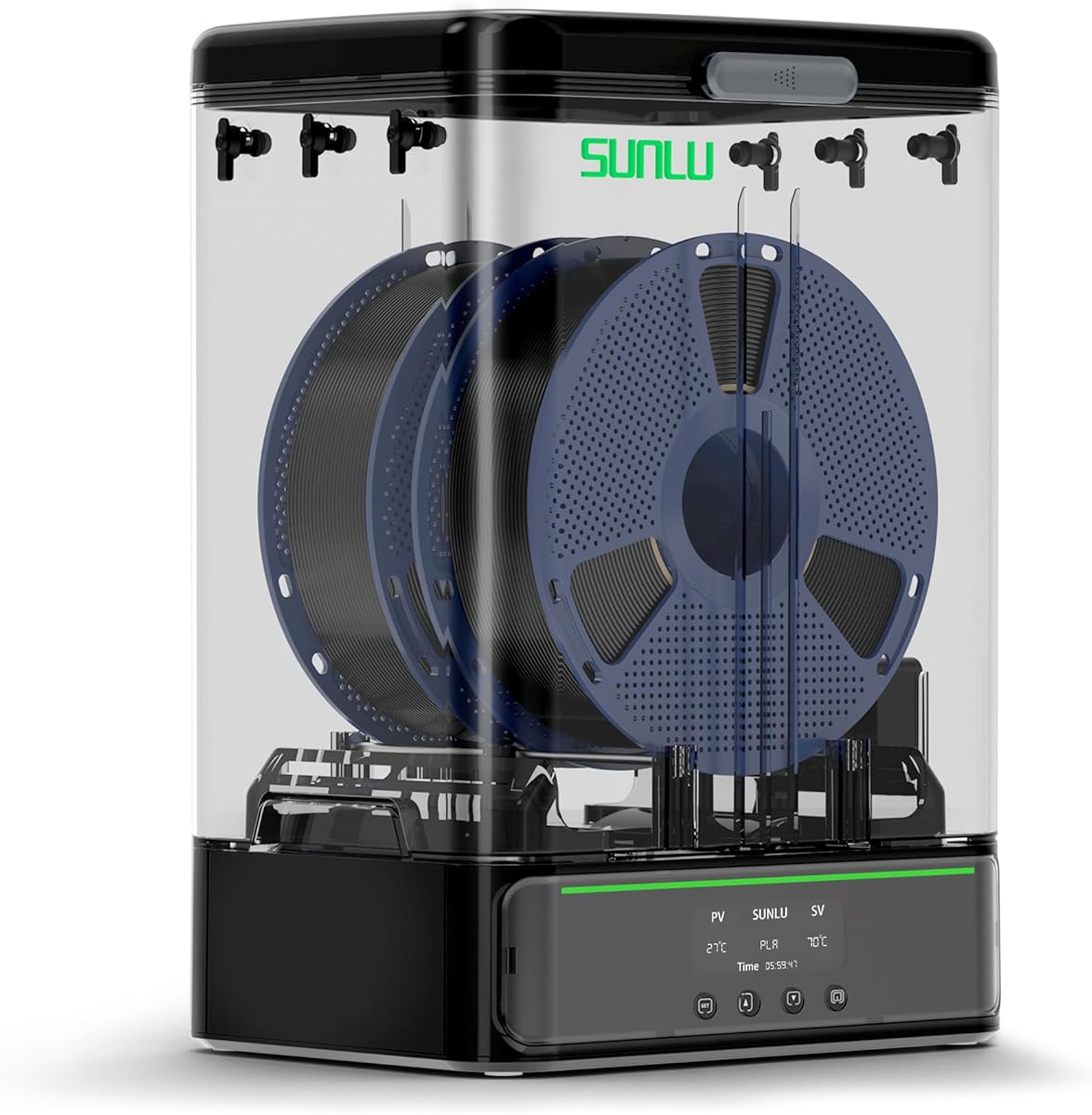
The SUNLU S4 is designed for multi-printer setups, offering immense flexibility for advanced users. Its rating of 4.5 reflects strong satisfaction regarding build quality and drying consistency. The large internal dimensions comfortably fit four standard 1kg spools.
We may earn a commission when you buy through this link, at no additional cost to you.
What sets this model apart is the eight filament exit holes, allowing you to feed different spools into multiple printers simultaneously. The 350W heater and three circulation fans ensure that heat is distributed evenly throughout the entire chamber for uniform results.
While the unit is robust and effective, its weight and size make it less portable. It is best suited for a permanent workstation setup where space is available. The high wattage ensures quick warm-ups, saving valuable time before printing starts.
This dryer is ideal for makers who run several machines and need reliable, continuous drying. It covers a wide range of materials from PLA to PC. The included accessories simplify setup and help maintain a clean printing environment.
Multiple outlet holes allow you to connect several printers to one drying unit at the same time.
Multiple fans ensure consistent temperature distribution, preventing hot spots that could damage sensitive materials.
We may earn a commission when you buy through this link, at no additional cost to you.
The SUNLU S2 proves that effective drying does not require a high price tag. With a solid 4.3 rating, it delivers essential features that address common moisture issues in 3D printing. Its simple operation makes it accessible for beginners.
We may earn a commission when you buy through this link, at no additional cost to you.
This unit effectively revives damp filament by maintaining consistent heat and allowing the spool to spin. The large internal volume accommodates two standard spools, which is sufficient for most casual users. The touch screen allows quick temperature and time adjustments.
While it lacks advanced dual chambers or high heat limits, it performs exceptionally well for common materials like PLA and PETG. The design is straightforward, focusing on core functionality without unnecessary complexity. This simplicity ensures reliability over time.
For those looking to improve print quality without spending a fortune, this dryer is an excellent entry point. It helps avoid stringing and clogging effectively. Its compact nature fits well in smaller workspaces where space is limited.
The touch screen interface allows users to set parameters quickly without needing complex menus.
The built-in spindle ensures the filament spins, promoting even drying throughout the entire spool.
We may earn a commission when you buy through this link, at no additional cost to you.
The SUNLU SP2 is distinct because it supports larger three kilogram spools, a rare feature in its class. With a 4.4 rating, it balances drying power with storage convenience. The storage box design allows you to keep filament sealed after drying.
We may earn a commission when you buy through this link, at no additional cost to you.
Heating to 70 degrees in just 15 minutes makes it very efficient for daily use. The included hygrometer and desiccant containers help maintain dry conditions when the dryer is not active. This dual functionality simplifies your workflow significantly.
The unit is robust and takes up moderate desk space. While it is heavier, the capacity for larger spools makes it ideal for extended print jobs. The touch screen provides clear feedback on temperature and humidity status.
If you often use large spools or need a storage solution alongside drying, this model is highly recommended. It reduces the need to transfer spools between boxes. The sealing mechanism ensures moisture stays out effectively.
Specific rollers allow this dryer to accommodate bulk spools, reducing frequent restocking needs.
Real-time humidity monitoring helps you understand when the internal environment is truly dry.
We may earn a commission when you buy through this link, at no additional cost to you.
The Creality Space PI Plus offers advanced features like one-touch presets for twelve different filament types. With a 4.4 rating, it simplifies setup for those who switch materials frequently. The touch screen makes operation intuitive and responsive.
We may earn a commission when you buy through this link, at no additional cost to you.
Its PTC heater ensures uniform heating across the chamber, avoiding uneven drying that can affect print quality. The timer allows for up to 48 hours of drying, which is useful for reviving older filament. Real-time humidity monitoring helps track progress.
While it holds only two spools, the efficiency of the heating system compensates for the lower capacity. The interface is modern and supports both Celsius and Fahrenheit units for convenience. The build quality is solid for its price category.
This dryer is perfect for users who want automation and ease of use without buying top tier equipment. It handles standard materials well and prevents moisture issues effectively. The presets save time compared to manual temperature calculation.
Twelve preset options allow quick selection of optimized settings for common materials like PLA and ABS.
360-degree hot-air circulation ensures the entire spool surface dries evenly without localized hot spots.
We may earn a commission when you buy through this link, at no additional cost to you.
Polymaker Polydryer focuses on the full lifecycle of filament maintenance by combining drying and storage. With a 4.3 rating, users appreciate the convenience of keeping materials dry during pauses in printing. The hygrometer helps track internal humidity conditions.
We may earn a commission when you buy through this link, at no additional cost to you.
The design prioritizes sealing and protection, using desiccant support alongside heating to keep filament dry long term. The even airflow design ensures that all materials inside receive consistent treatment. It works with a wide range of common polymers.
While it lacks active temperature display features, the simplicity reduces potential points of failure. The box allows you to move from drying to storage without exposing filament to ambient air. This reduces reabsorption risks significantly.
For users who value a complete moisture control routine, this dryer is a strong option. It is easy to integrate into any workflow. The integrated approach supports consistent quality over extended periods.
The storage design ensures that once dried, the filament stays protected without needing extra bags.
Active desiccant containers provide an extra layer of protection against moisture when the dryer is off.
We may earn a commission when you buy through this link, at no additional cost to you.
The SUNLU S1 Plus introduces a fan design to improve moisture discharge speed compared to standard models. With a 4.3 rating, it effectively addresses stringing and clogging issues caused by damp filament. The LCD screen shows temperature and humidity clearly.
We may earn a commission when you buy through this link, at no additional cost to you.
You can adjust time and temperature to match specific environmental conditions. The fan helps reduce the impact of humid weather on filament quality significantly. It fits most standard spools and brands seamlessly.
While it does not reach higher temperatures, the fan helps dry standard materials efficiently. The interface is simple and allows quick adjustments during use. The visual feedback helps you confirm the internal environment is safe.
This dryer is ideal for users who need faster drying cycles without complex features. It supports a broad range of materials effectively. The upgrade in airflow makes it a reliable choice for daily printing needs.
The integrated fan design helps expel excess moisture more quickly than passive drying alone.
The screen provides clear feedback on temperature and humidity for easy monitoring.
We may earn a commission when you buy through this link, at no additional cost to you.
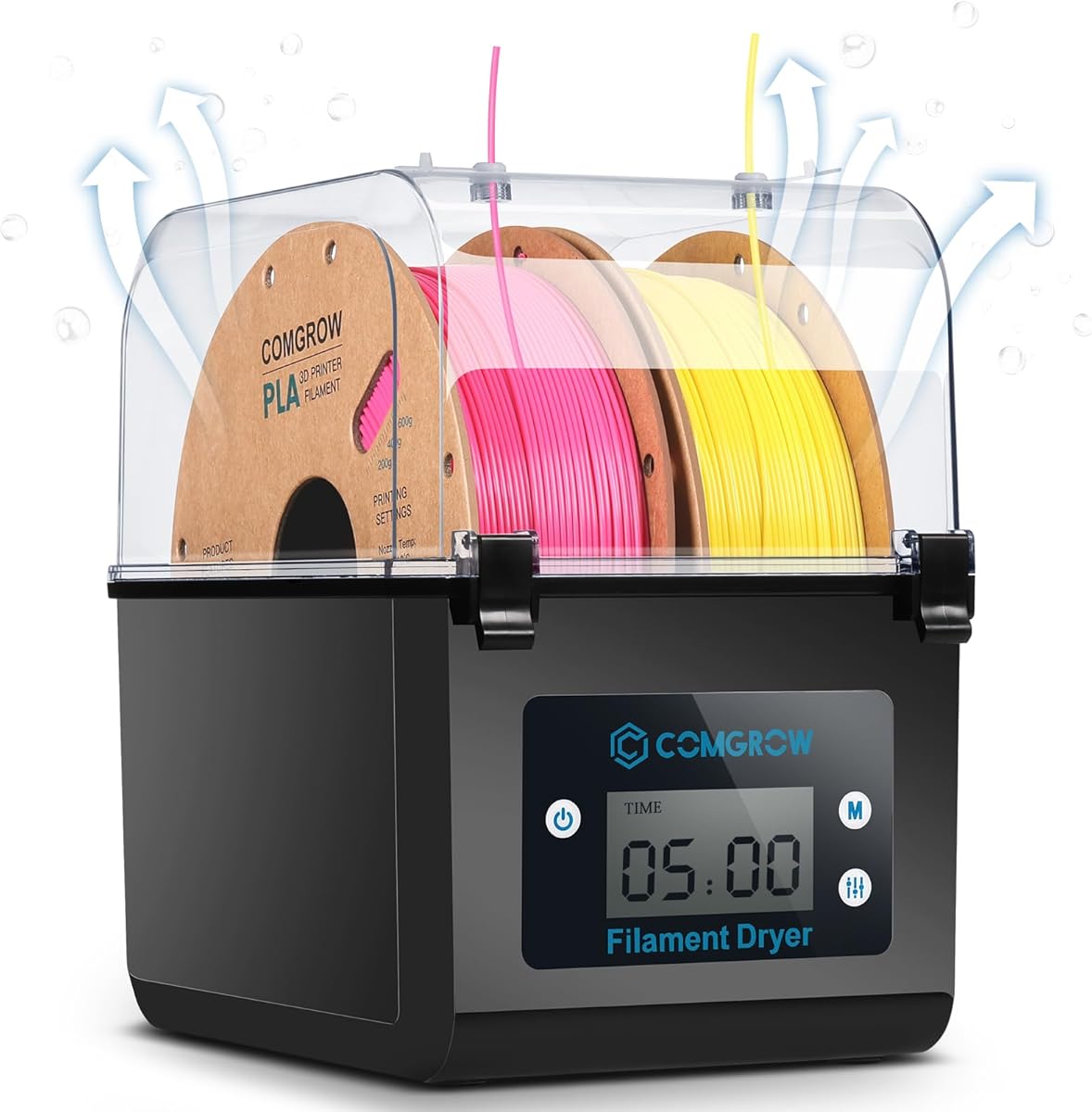
The Comgrow Dryer Box offers a reliable solution for keeping spools dry during printing. With a 4.4 rating, it provides stable operation for standard materials. The LCD interface makes it easy to set time and temperature.
We may earn a commission when you buy through this link, at no additional cost to you.
Its sealed design prevents moisture from entering when not in use. The outlet structure uses silicone and Teflon to ensure smooth feeding. It supports various standard diameters and materials effectively.
While the max temperature is limited, it is sufficient for PLA and ABS. The touch controls are straightforward and the machine shuts down automatically to save power. It is a practical tool for maintaining consistent prints.
This dryer is best suited for users with standard material needs. It prevents clogging and layer migration by keeping filament dry. The build quality is solid and it is easy to operate.
Snap button structures and silicone sheaths help maintain a tight seal to protect filament from humidity.
Auto shut down after three minutes prevents overheating and saves energy when not in use.
We may earn a commission when you buy through this link, at no additional cost to you.
The Creality Space PI SE heats up quickly and maintains even heat with its built-in fan. With a 4.3 rating, it offers precise sensor control for drying. The insulation cotton keeps the box warm and safe to touch.
We may earn a commission when you buy through this link, at no additional cost to you.
It solves common printing failures by removing moisture effectively. The display shows real-time humidity and drying hours. You can set time and temperature to suit different environmental conditions. It supports most standard spools well.
While it handles only one spool, it is effective for users who manage materials individually. The knob interface is simple to use and reduces complexity. The build quality is solid for the price point.
For those needing quick setup and reliable drying, this unit is a good choice. It works well with a variety of filaments. Pairing with Teflon tubes improves feeding smoothness significantly.
The PTC solution allows the chamber to reach 65 degrees within 15 minutes for efficient drying.
Internal cotton lining keeps heat in and protects users from burns during operation.
We may earn a commission when you buy through this link, at no additional cost to you.
The SUNLU S2 provides a straightforward and effective drying solution. With a 4.3 rating, it focuses on removing moisture without complex features. The translucent lid allows you to check filament status without opening the box.
We may earn a commission when you buy through this link, at no additional cost to you.
Its spindle rotation ensures even drying by spinning the filament continuously. You can set time and temperature easily to suit your needs. The large capacity fits various spool sizes and brands comfortably.
While it lacks humidity monitoring, the simple controls make it easy to manage. The design is practical for reviving old or damp filament effectively. It helps avoid brittleness and threading issues during prints.
For users on a budget, this dryer is a solid choice. It maintains dry conditions during printing to improve quality. Its simplicity ensures it is easy to integrate into any 3D printing workflow.
The built-in spindle turns the filament continuously to prevent uneven drying across the spool.
The clear lid lets you check on filament status without breaking the seal or opening the box.
We may earn a commission when you buy through this link, at no additional cost to you.
Selecting the right dryer involves considering capacity, heating speed, and material compatibility. Understanding these factors helps you avoid common pitfalls and get the best value for your workflow.
The size of the dryer determines how many spools you can store or dry at once. Larger units with four spools are ideal for heavy users, while compact ones save space. Ensure the internal dimensions match your preferred spool size.
Always check internal dimensions to confirm the dryer fits your standard 1kg or larger spools comfortably.
Faster heating means less wait time before printing. Look for units that reach effective temperatures quickly. Higher maximum temperatures allow drying of tougher materials like Nylon and ABS, while lower ones suit PLA.
Choose a model that heats up in under 20 minutes for efficient daily workflow.
Different filaments require specific heat ranges. A good dryer should handle common materials and specialty types. Check the product specifications to ensure it supports your favorite blends like PETG or TPU.
Verify that the dryer supports the full range of materials you plan to use regularly.
Some dryers include hygrometers to track internal humidity. This helps you confirm filament is ready before printing. Models with displays allow you to avoid guessing and ensure dry conditions.
Prioritize models with built-in humidity sensors if accuracy is important for your prints.
Touch screens offer precise control, while knobs are simpler. Decide based on your comfort with technology. Clear displays help you track time and temperature easily during drying cycles.
Select an interface that matches your technical comfort level for ease of use.
After drying, keeping filament dry is vital. Look for models with good seals or storage lids. Airtight designs prevent moisture reabsorption when the dryer is turned off.
Ensure the unit maintains a tight seal to protect dried filament from ambient humidity.
Higher wattage means faster heating but requires appropriate outlets. Check for safety features like thermal fuses or auto shut-offs. Proper ventilation is also key to avoid overheating.
Confirm the unit has safety mechanisms to prevent overheating during long drying cycles.
Budget models may lack features like humidity monitoring. Higher-end units offer capacity and speed. Balance your needs with your budget to get the best value.
Focus on features that directly improve your printing quality and workflow efficiency.
Place the spool into the chamber and connect the PTFE tube to your printer. Ensure the tube is properly sealed to prevent air leaks during drying. This setup allows simultaneous drying while printing.
Set the temperature and time based on the filament type. Use presets if available, or consult manufacturer guidelines. Monitor the screen for progress and ensure the humidity drops to acceptable levels.
After use, clean the interior regularly and store the unit in a dry area. Check the sealing gaskets for wear to maintain effectiveness. Proper care extends the life of the dryer and ensures consistent results.
Filament often needs drying if you hear cracking sounds during printing or see excessive stringing. Look for poor layer adhesion or bubbles on printed surfaces. A hygrometer or testing a spool can confirm moisture levels.
Most units support common materials but require specific temperature settings. High-performance filaments like Nylon need higher heat. Check the dryer specifications to confirm it supports your intended materials.
Drying times vary from 4 to 10 hours depending on moisture levels. Units with fans heat faster and dry quicker. Always follow recommended times to avoid under or over drying.
If there is no display, use a separate hygrometer or follow fixed time settings. Monitor print quality to gauge if drying is effective. Consistent settings often suffice for standard materials.
Yes, most modern units have safety features to manage power use. However, ensure the area is well ventilated. Always check auto shut-off functions to prevent issues when unattended.
Using it during every print ensures filament stays dry throughout the job. For short prints, drying beforehand might suffice. Long or critical prints benefit from continuous drying to avoid failure.
Yes, many units double as storage boxes with seals. This keeps filament dry until your next print. Ensure the lid seals properly to maintain internal conditions effectively.
The Creality Space Pi X4 and SUNLU S4 lead the list for capacity and features. The SUNLU S2 stands out as a reliable budget option for most users. Each model offers distinct strengths for different printing needs.
Prioritize capacity if you use multiple spools. Choose models with good sealing and humidity monitoring for best results. Always consider material compatibility before purchasing to ensure full utility.
Check current prices and availability before deciding as offers change frequently. The investment in a proper dryer will significantly improve your print quality and reduce wasted materials.