
NIMO 15.6 Student Laptop
5.0Editor score
15.6 inch Full HD
Intel N150 CPU
Fingerprint security access
Finding the right device for young learners is crucial for success. A good laptop balances performance with durability and user friendly interfaces. It should support educational apps while remaining easy for children to navigate independently.
We compared leading models based on processor power screen quality and educational software support. Each selection offers unique strengths for coding beginners ranging from simple interfaces to advanced development environments.
Each pick highlights specific strengths for different age groups and learning styles. Please note that availability and pricing fluctuate frequently so verify current details before purchasing to ensure you get the best value today.
5.0Editor score

4.2Editor score

4.2Editor score
As an Amazon Associate we earn from qualifying purchases.
This side by side comparison highlights key specifications across all ten selected models. Review processor types screen sizes and special features to find the perfect match for your child learning needs.




This HP Chromebook stands out as a versatile choice for young coders. Its 4.2 rating reflects strong performance across daily tasks and educational software. The 2-in-1 design allows flexibility between traditional typing and touch-based interactions.
We may earn a commission when you buy through this link, at no additional cost to you.
The Intel N150 processor handles lightweight coding environments efficiently. Combined with a crisp WUXGA touchscreen it offers clear visuals for reading code and debugging. The 360-degree hinge supports multiple viewing angles ideal for collaborative learning sessions.
While the 4GB memory is adequate for web-based tools it may struggle with resource intensive IDEs. Storage is also fixed at 128GB so relying on cloud storage is essential. These trade-offs are acceptable given the durability and portability.
Best suited for students needing a reliable machine for browser-based coding classes. Parents seeking a long-term device with robust security will appreciate the extended support window. This model balances cost and capability effectively.
The 360 hinge allows Tent mode for video tutorials or Tablet mode for interactive touch apps during lessons.
Military-grade testing ensures the laptop withstands bumps and drops common in active learning environments.
We may earn a commission when you buy through this link, at no additional cost to you.
This Lenovo Chromebook offers exceptional value for families on a budget. It features a capable MediaTek processor that handles web browsing and light applications smoothly. The included accessory bundle adds immediate usability for new users.
We may earn a commission when you buy through this link, at no additional cost to you.
The MediaTek Kompanio 520 provides solid performance for Chrome OS tasks. Storage can be expanded with a memory card which is helpful for saving projects or media files. The Full HD touchscreen ensures clear text for coding exercises.
The MediaTek chip may lack specific driver support for certain advanced development environments. Users relying heavily on Linux-based tools might find limited compatibility. However for most introductory coding classes this is sufficient.
Ideal for students needing a portable device for school assignments. The long battery life supports all-day use without charging. This model delivers strong utility without breaking the bank.
Support for memory cards allows easy expansion beyond the base 64GB internal storage.
Includes a USB-C dock and mouse which simplifies setup for young users immediately.
We may earn a commission when you buy through this link, at no additional cost to you.
Designed specifically for education this HP Chromebook prioritizes durability and reliability. It earned a 4.5 rating for consistent performance in classroom settings. The compact form factor makes it easy for smaller hands to carry.
We may earn a commission when you buy through this link, at no additional cost to you.
The AMD A4 processor delivers decent speed for basic web coding tools. A backlit keyboard helps during low-light study sessions. Multiple USB ports allow connecting peripherals like mice or external drives easily.
Storage is limited to 32GB which requires frequent cloud syncing. The screen size is smaller than average potentially making code harder to read. These limitations are offset by its ruggedness and portability.
Best for younger students needing a tough device for daily school use. The educational focus ensures it meets school district requirements. This is a practical choice for home or classroom environments.
Built to withstand spills and drops common in active student environments.
Includes multiple USB ports for connecting external accessories without adapters.
We may earn a commission when you buy through this link, at no additional cost to you.
This toy laptop introduces very young children to computer concepts safely. It includes a full-size keyboard and cursor controller for motor skill practice. The activities are pre-loaded so no internet is required for use.
We may earn a commission when you buy through this link, at no additional cost to you.
The bilingual feature supports English and Spanish which aids language development. With 80 different activities it keeps kids engaged for extended periods. The design mimics a real laptop helping build familiarity.
It lacks the power to run actual coding software or internet apps. It is strictly for pre-literacy and basic logic exercises. Parents should view this as a supplement rather than a primary tool.
Perfect for toddlers transitioning to screen time without real devices. It builds confidence with technology before moving to complex systems. This makes it an excellent starter gift for early learners.
All activities are stored locally so children can play anywhere without Wi-Fi.
The realistic keyboard helps kids practice typing before using a real computer.
We may earn a commission when you buy through this link, at no additional cost to you.
This renewed model provides a cost-effective entry into actual laptop computing. It holds a perfect rating due to reliable performance after refurbishment. The 15.6-inch screen offers ample workspace for coding tasks.
We may earn a commission when you buy through this link, at no additional cost to you.
The Intel N150 CPU ensures smooth operation for web-based coding editors. A fingerprint reader adds security for family sharing. The backlit keyboard helps during evening study sessions without eye strain.
Being renewed means minor cosmetic wear may exist but function is guaranteed. Build materials are standard plastic rather than premium metals. This reduces cost significantly while maintaining performance standards.
Ideal for students needing a full Windows or Linux environment affordably. The long warranty provides peace of mind for parents. This is a strong choice for budget-conscious buyers.
Fingerprint access allows quick and safe login for multiple family members.
Full HD resolution ensures text remains sharp during long coding sessions.
We may earn a commission when you buy through this link, at no additional cost to you.
This HP model emphasizes portability and basic performance for students. It features a capable chipset suitable for web-based coding environments. The compact design makes it easy to slip into a school bag.
We may earn a commission when you buy through this link, at no additional cost to you.
With 8GB memory it handles browser tabs efficiently better than many rivals. Chrome OS ensures quick startup and secure browsing for young users. The small screen saves space but may limit visibility.
Specific details on display brightness or battery life are less documented. The storage is limited which requires reliance on cloud services. However for basic coding tasks this configuration is functional.
Best for students prioritizing weight and mobility over screen real estate. The memory allocation supports multitasking well. This is a viable option for mobile learners.
8GB RAM allows multiple browser windows open simultaneously without slowdown.
Small footprint makes it easy to carry to and from school.
We may earn a commission when you buy through this link, at no additional cost to you.
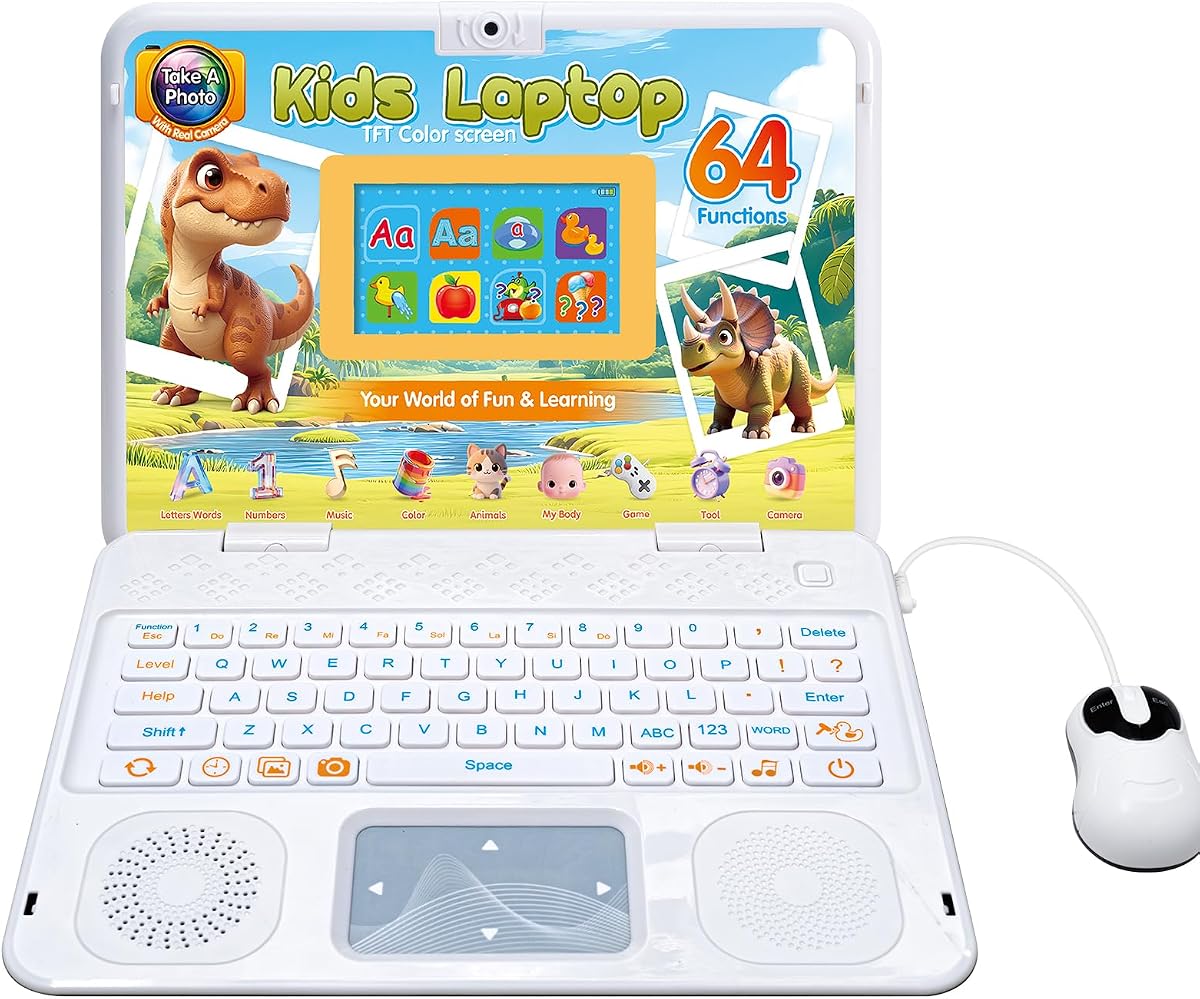
This educational toy introduces basic tech concepts through interactive play. It includes a functional camera for taking photos which adds excitement. The color screen displays vibrant images for learning activities.
We may earn a commission when you buy through this link, at no additional cost to you.
With 64 modes it covers topics from math to general knowledge. The ergonomic design fits small hands comfortably for extended use. It simulates a real laptop layout effectively.
It lacks internet connectivity and complex software capabilities. The screen is smaller than standard laptops which limits detailed work. It is designed purely for entertainment and early education.
Perfect for children aged five and up learning basic computer terms. The camera feature encourages creativity and engagement. This is a fun bridge to real technology.
Built-in camera allows kids to take photos using fun filters.
Sixty-four modes provide variety for different educational needs.
We may earn a commission when you buy through this link, at no additional cost to you.
LeapFrog creates devices that make early learning engaging. This model introduces basic coding concepts through fun character interaction. The activities focus on numbers letters and simple logic.
We may earn a commission when you buy through this link, at no additional cost to you.
Pixel the companion character responds to inputs encouraging participation. Children can create simple programs to make Pixel move or talk. This helps understand sequence and commands early.
It is not a computer in the traditional sense. The functionality is limited to pre-set educational games. It serves best as a supplementary learning tool for very young kids.
Ideal for preschoolers exploring cause and effect with technology. The character makes learning feel like a game. This is a great first tech toy.
Pixel character responds to commands making learning interactive.
Teaches basic sequencing through simple program creation.
We may earn a commission when you buy through this link, at no additional cost to you.
This educational toy emphasizes logic and mathematics skills. The TFT color screen provides clear visuals for activities. It includes numerous modes covering various subjects for diverse learning.
We may earn a commission when you buy through this link, at no additional cost to you.
The ergonomic shape is comfortable for children to hold. It simulates typing and mouse usage to build familiarity. Games help reinforce concepts after learning activities.
The screen often comes with a protective film that must be removed. Content is static without dynamic internet updates. It is strictly for offline play and learning.
Best for reinforcing school concepts like math and logic. The design feels realistic enough to bridge to real laptops. This is a practical educational tool.
Focuses heavily on math and logic to support schoolwork.
Realistic keyboard helps kids feel like real computer users.
We may earn a commission when you buy through this link, at no additional cost to you.
This device offers advanced features for family safety and storage. It includes robust parental controls and customizable profiles. The touchscreen interface supports interactive learning apps effectively.
We may earn a commission when you buy through this link, at no additional cost to you.
With 128GB storage it holds extensive educational content. The octa-core processor ensures smooth app performance. It supports Google Play for broader app access.
As a hybrid device it may lack desktop OS capabilities. The price is higher than basic toy laptops. However for families needing safety and storage this is justified.
Ideal for families wanting secure tech for multiple children. The profile system simplifies management. This is a strong premium choice for households.
Customizable profiles ensure safe and tailored content for kids.
128GB internal storage holds extensive apps and media.
We may earn a commission when you buy through this link, at no additional cost to you.
Selecting the right device involves balancing performance cost and educational needs. Consider these factors to match a laptop with your child learning stage.
The operating system determines which coding languages and tools are accessible. Chrome OS is simple and secure for beginners. Windows or Linux offers broader software options for advanced students.
Choose an OS that aligns with your child learning goals and comfort level.
A larger screen helps reduce eye strain during long coding sessions. Look for high resolution displays that show text clearly. Touchscreens can be helpful for interactive apps.
Prioritize screens that are bright and sharp for reading code comfortably.
Processing power affects how quickly the device handles multiple apps. At least 4GB RAM ensures smooth operation for basic tasks. More memory helps with complex development environments.
Ensure the processor supports the required software for coding classes.
Long battery life supports use without constant charging. Aim for devices lasting at least eight hours. This is crucial for portable learning during travel.
Check battery specs to ensure the device lasts through the school day.
Kids often handle devices roughly so durability is key. Look for rugged cases or tested build quality. Drop resistance and spill resistance are valuable features.
A durable laptop saves money by reducing replacement needs.
Lightweight laptops are easier to carry to school or home. Consider weight when choosing between larger and smaller models. Portability encourages consistent use.
Choose a size that is easy for your child to transport daily.
Reliable Wi-Fi is essential for online coding resources. Ensure the device has necessary ports for peripherals. Bluetooth allows connecting wireless keyboards or mice.
Verify connectivity options match your peripheral needs.
Budget determines available features and brand. Consider total cost including accessories. Warranties provide protection against accidental damage.
Balance initial cost with long-term reliability for best value.
Teach your child to close apps completely when not in use to maintain performance. Use a protective sleeve when transporting the device to avoid scratches. Keep liquids away from the keyboard to prevent spills.
Update the operating system regularly to ensure security and access to new features. Clear browser caches occasionally to free up storage space. Monitor battery health by avoiding complete drain cycles.
Create organized folders for coding projects to teach file management. Use parental controls to limit screen time safely. Encourage regular breaks to prevent eye strain during long sessions.
Most children can begin with basic concepts around age five or six. Simple tools like Scratch work well on most devices. Focus on creativity rather than complex syntax initially.
Chrome OS is sufficient for many introductory coding tools. It supports web-based editors like CodePen and Scratch. Advanced users may eventually need Windows for specific languages.
For basics four gigabytes is adequate. More advanced tools or virtual machines benefit from eight gigabytes. Aim for higher RAM if planning long-term use.
Touchscreens can enhance interactive learning for younger kids. However physical keyboards are better for typing code. Hybrid devices offer the best of both worlds.
A mouse and protective case are essential. Headphones help during online lessons. An external hard drive supports larger projects.
Use parental controls to manage app access. Stick to reputable coding platforms. Ensure privacy settings are configured correctly.
Our top picks include the HP Chromebook 14 x360 Plus for versatility and the NIMO 15.6 for budget value. Each device offers unique advantages depending on specific requirements.
Prioritize screen quality and portability when making your decision. Ensure the device supports the specific coding languages your child will learn.
Verify current availability and specifications before purchasing as models update frequently. Selecting the right tool sets the foundation for successful coding education.